January 8, 2007

Making Love

The Beatles' Love "is the soundtrack to a Cirque du Soleil show that celebrates The Beatles and their legacy." (Capitol Records © 2006)

Love is primarily the work of Giles Martin, son of the actual "fifth Beatle," George Martin. He received the remaining Beatles' approval and encouragement after playing them a demo tape he put together, adding percussion to "Here Comes the Sun" and "I Am the Walrus."

The result is an interesting new spin on the old songs. Love is peppered throughout with brilliant, logical collages of songs which reveal commonalities (between the songs) you would never otherwise have noticed. There are several moments on the disc that I think reveal Giles' knowledge of and appreciation for the Beatles' music and personal history. For example, anyone familiar with the history of John's mother know how perfect the "Julia" half of "Eleanor Rigby/Julia (Transition)" is.

Check out NPR's interview with Giles Martin (listen to the interview). For Beatles' fans, there's some really interesting information about how Giles and his father made sweet Love.

January 5, 2007

Palm to fingertip, palm to fingertip


OMFG this is funny:
Video description from YouTube: "The Hair Petting Game is the latest craze to sweep the nation. Join the Bad Girls as they demonstrate their techniques on the streets of NYC."

As cityrag (via ThePoorBastard) puts it, "These chicks is bananas...". It looks like they're having a blast! I'd have a strong urge to wash my hands though.

"I Couldn't Sleep a Wink Last Night"

This is a repost, of sorts, but I don't think my Sinatra peeps will mind too much. I did a previous post featuring a young Frank (Frankie) performing "I Couldn't Sleep a Wink Last Night" (by Harold Adamson and Jimmy McHugh) in the 1943 film Higher and Higher. This alone would warrant a repost (because it's so sublimely beautiful). But I have added the little bit of it he performed twenty-six years later on a TV special called, simply, Sinatra.


The record shows he took the blows...

January 4, 2007

Streets of Mexia

A popular local joke recalls two individuals (commonly Aggies) passing through town, arguing over the correct pronunciation of the city (one arguing for "muh-hay-uh" – the proper pronunciation; the other insisting on "mex-ee-uh" – the incorrect one). They stop in at a local eating establishment to settle the matter, asking, "how do you pronounce the name of this place?" The proprietor (waitress is also used in some versions) responds, "Deh-ree Kween." (from TexasEscapes.com)

115 miles W of Nacogdoches, 43 miles E of Waco, Mexia, Texas is named for a Mexican general, José Antonio Mexía, who joined an unsuccessful uprising against Santa Anna and died before a firing squad. A gas discovery in 1912 and an oil gusher in 1921 made it a boom town. From just 3,482 people the population exploded to an estimated 35,000 in 1922. It became so rowdy that martial law was imposed.

photograph from Mexia Blackcats 1959 (The Unofficial Blog of the Mexia [Texas] Graduating Class of 1959)

After the initial boom, the population decreased to a more manageable 10,000 by the mid-20s, but the onset of the Great Depression forced people to leave Mexia to find greener pastures. The population stabilized around 6,500 in the early 1930s, but the number of businesses reported fell by one third. A German Prisoner of War Camp was built in Mexia in 1942. The population was given as 6,618 in the early 1950s, not far from today's figure of just under 7,000. (History from TexasEscapes.com and The Roads of Texas)

Commerce Street in the 1930s or early '40s
photograph from Mexia Blackcats 1959 (The Unofficial Blog of the Mexia [Texas] Graduating Class of 1959)

Quite frankly, Mexia seemed pretty rundown. There was a fairly clear demarcation line separating what was left of the old downtown, and the virtual ghetto just a block away. I turned a couple of corners (on foot) I wasn't sure I should have taken.


Safeway?


City Hall/Civic Center

Ghosts in Mexia:


"Bull Durham" - do you see it?

1898 First Presbyterian Church


What lured me to Mexia:

Now a Spanish, Pentecostal church


And finally, I drove right past this lonely, little place as I pulled in to Mexia, and I just had to stop and take its picture as I left:


January 3, 2007

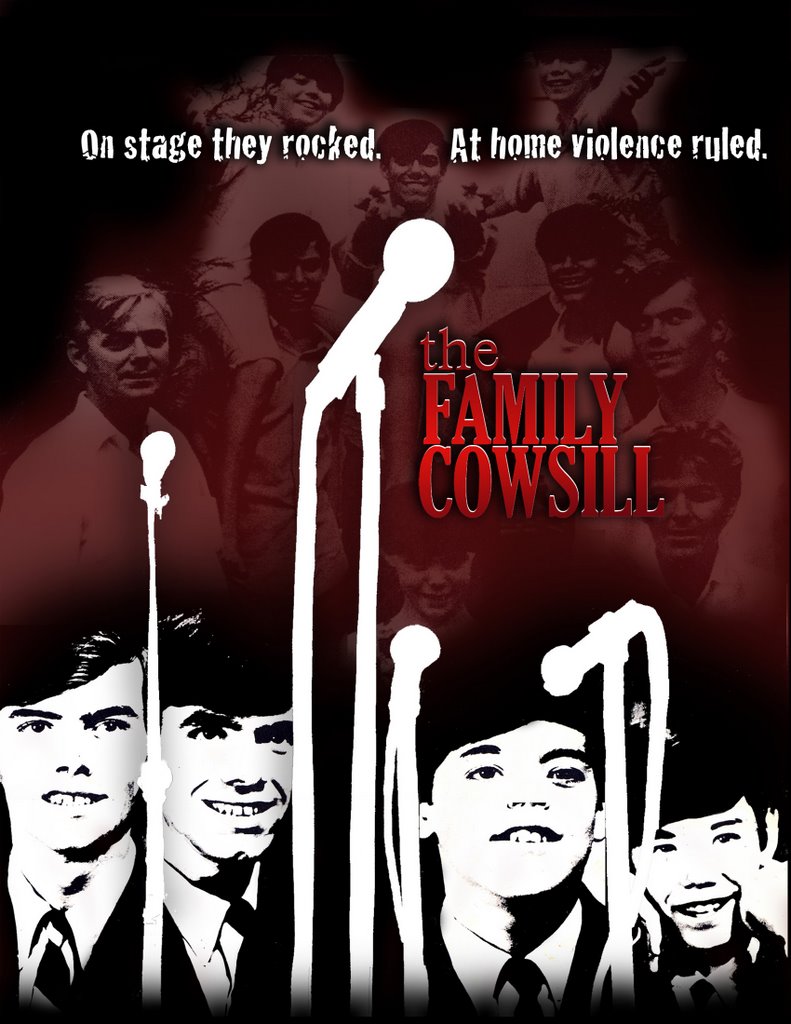
The Cowsills, revisited

The Cowsills are one of those musical "entities" which fascinate me. I find their story to be such a poignant one. At a very early age (the youngest, Susan, was nine), they had phenomenal success and were the recipients of intense adulation. It ultimately didn't last. Along the way, they had their share of tragedy, as well. They are now a fairly obscure, musical footnote. While researching them for my previous Cowsills post, I discovered that there's a documentary in the works. I hope the makers finish it!

Until that one comes out, here is a rather short documentary (2 minutes), explaining, among other things, why lead singer Billy was kicked out of the group by his father, and what it was like after the group dissolved in 1971:


This one is even better (includes a few seconds of them performing "The Rain, The Park, and Other Things" live). It's a little over 4 minutes:


It all started with the pure, bubblegum-pop psychedelia of "The Rain, The Park, and Other Things." This is a 1967 promo film for the single (it reached #2 in the U.S.). The footage is rather bad, but I love the song so much, I can bear it:

Here they are after they reunited (minus Barry and Billy) in 1990, appearing on The Joan Rivers Show. This is a great interview, and it is the one in which Susan voiced her frustration as to never being able to figure out which of the two girls on The Partridge Family was supposed to represent her(!).


Returning to their "glory days," here they are performing on their November 23, 1968, TV special A Family Thing. The song is "Indian Lake," and as pointed out at Bedazzled!, Susan is in fact quite a groovy dancer. I figure she must have watched Laugh-In every week.


There's a great summary of the special (including transcripts of each skit) at this Cowsills site.

halcyon days?

January 2, 2007

This Is Spinal Tap (1984)


This Is Spinal Tap is a 1984 "mockumentary" directed by Rob Reiner and starring members of the heavy-metal band Spinal Tap. The film satirizes the wild behavior and musical pretensions of Led Zeppelin, AC/DC, The Rolling Stones, The Who, Queen, Aerosmith, KISS, Black Sabbath, Judas Priest, The Beatles, etc.

Much of the film was ad libbed, and several dozen hours of footage were shot before Reiner edited it down to the released film. A 4½ hour bootleg version of the film exists and has been traded among fans and collectors for years.

Nigel Tufnel (Christopher Guest) showing off his guitar collection to Marty DiBergi (Reiner) whilst wearing "my exact inner structure, done in a tee shirt. Exactly medically accurate."

That scene:

"Pop, Look & Listen" - British TV, 1965, David St. Hubbins (Michael McKean) on the right
John "Stumpy" Pepys (Ed Begley Jr.), one of the first in a long line of Tap drummers

Performing "Give Me Some Money" (in color!):

Helping to spread "the word" (love) in '67 with a performance of "(Listen To The) Flower People":


Bass player Derek Smalls (Harry Shearer)


And their more recent incarnation:
Music video for "Hell Hole":

"Hell Hole," of course, is off of Tap's classic Smell the Glove LP from 1982:

none blacker