Harper Lee's first and only novel, To Kill a Mockingbird, was published in 1960. The classic novel is based on Lee's childhood in Monroeville, Alabama. The film version came out two years later. If you've never read the novel or seen the film, be aware, there are major spoilers ahead. I wouldn't want to ruin it for anyone.

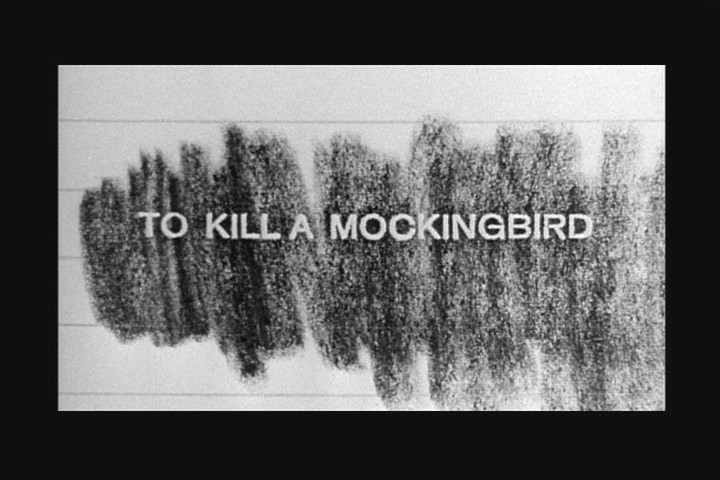


Here is the superb opening title sequence, with the moving theme from composer Elmer Bernstein (the entire soundtrack is worth checking out).

"Maycomb was a tired old town, even in 1932...when I first knew it. Somehow, it was hotter then. Men's stiff collars wilted by nine in the morning. Ladies bathed before noon and after their three o'clock naps. And by nightfall they were like soft teacakes with frosting from sweating and sweet talcum. The day was twenty-four hours long, but it seemed longer. There's no hurry, for there's nowhere to go and nothing to buy...and no money to buy it with. Although Maycomb County had recently been told that it had nothing to fear but fear itself.
That summer, I was six years old."
There's something very moving about the narrator's read of those lines. It never fails to get me choked up.
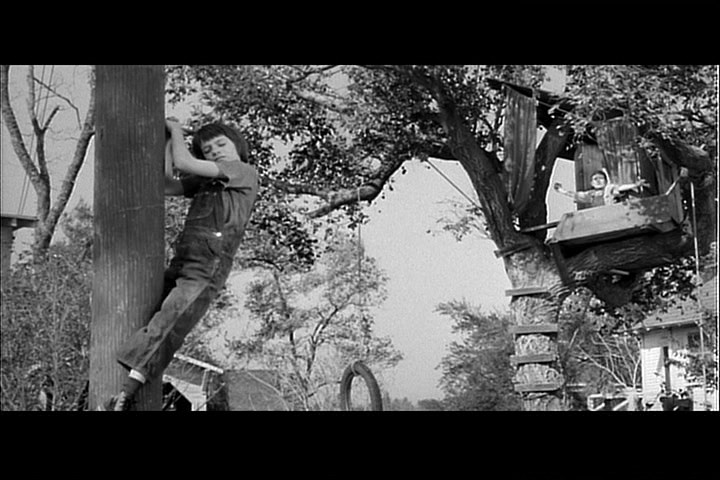
"I'm having a terrible time, Miss Maudie. Jem is staying up in that tree until Atticus agrees to play football for the Methodists..."
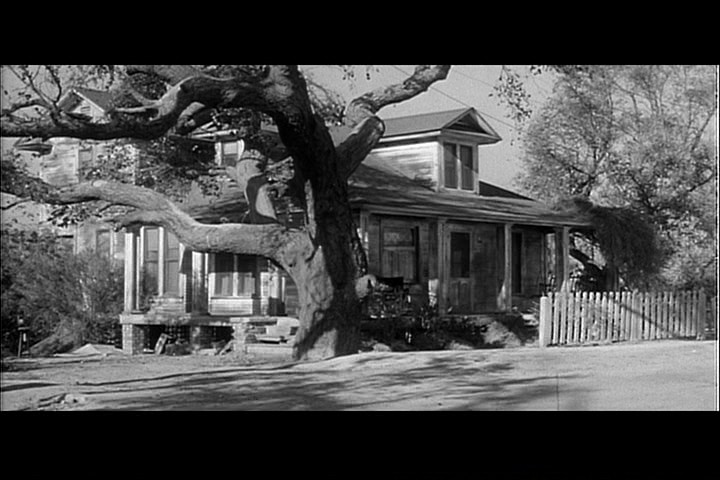
The Radley house, by day--"The house is low and was once white with a deep front porch and green shutters. But it darkened long ago to the color of the slate-gray yard around it. Rain-spotted shingles droop over the eaves of the veranda. Oak trees keep the sun away. The remains of a picket fence drunkenly guard the front yard. A 'swept' yard that is never swept, where Johnson grass and rabbit tobacco grow in abundance."

"Atticus, do you think Boo Radley ever comes and looks in my window at night?"


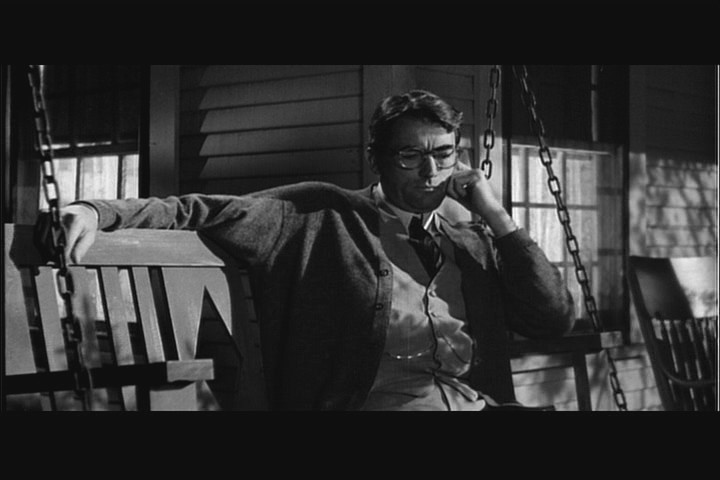
Atticus, played by Gregory Peck. Now that was a movie star. Atticus was selected by the American Film Institute a couple of years ago as the number one film hero in cinema history. Atticus is everything a man should aspire to be. I love Atticus.
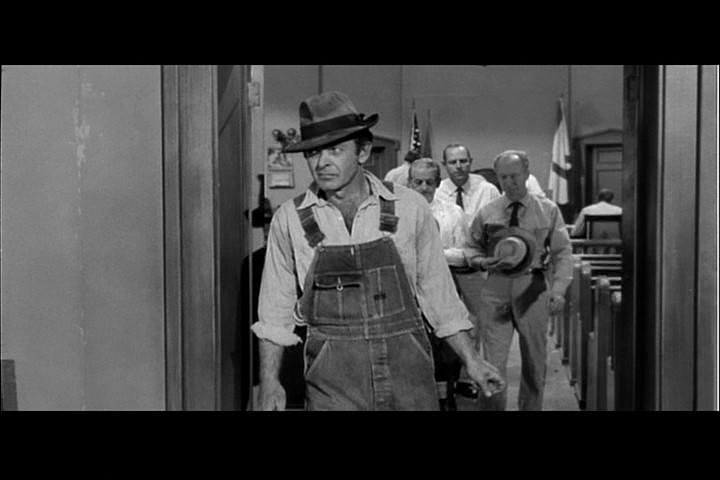
Robert E. Lee Ewell, "a short, bantam cock of a man" (cue "The Imperial March" [Darth Vader's theme])
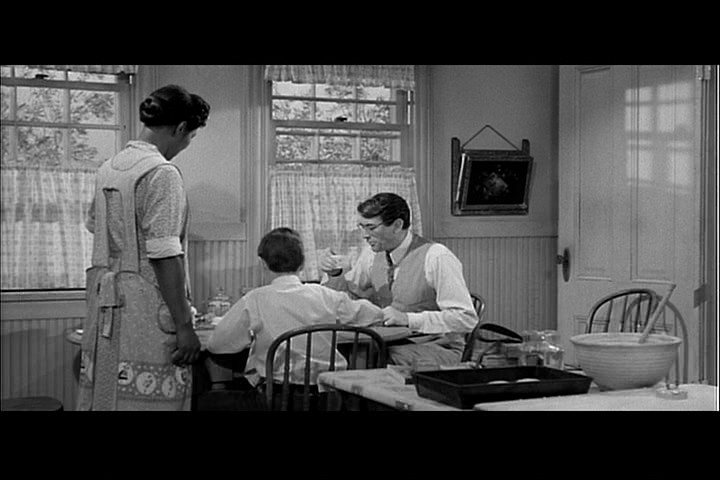

"I still don't know why I have to wear a darn old dress."

Jem discovers tree treasure.
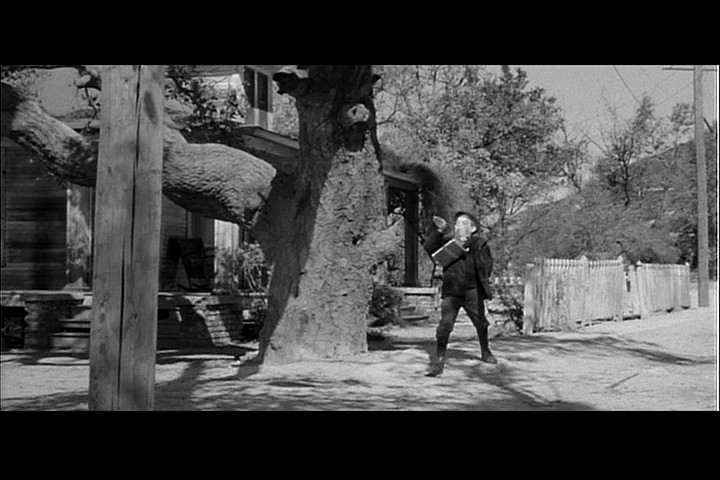
Scout: What are you doing?
Jem: Walking like an Egyptian. We were studyin' about them in school. Teacher says we wouldn't be no place without them.
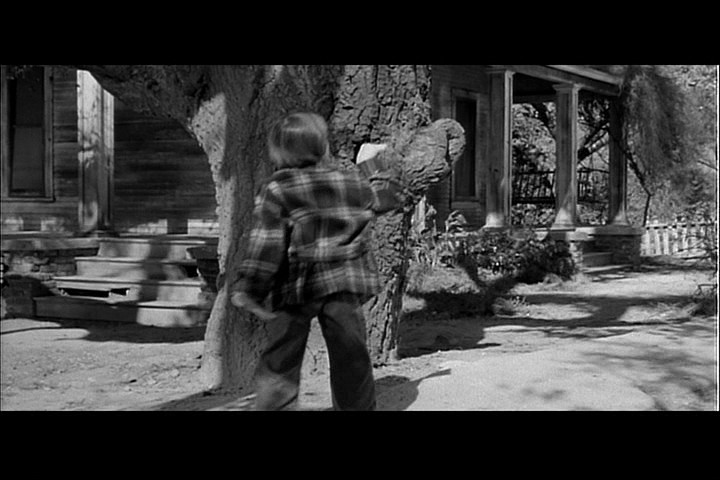
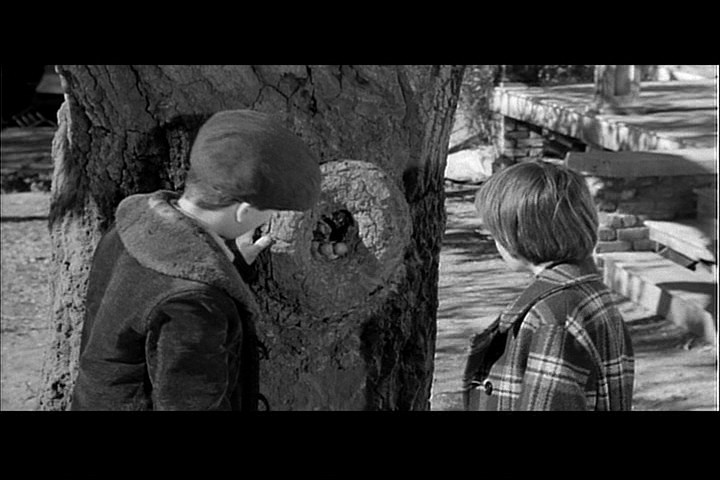
"Look, Jem."

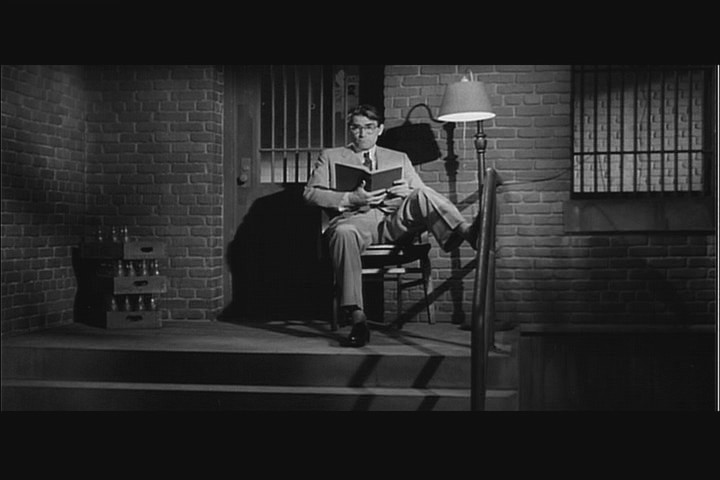
Motivated by an inherent sense of, and duty to, that which is "right",
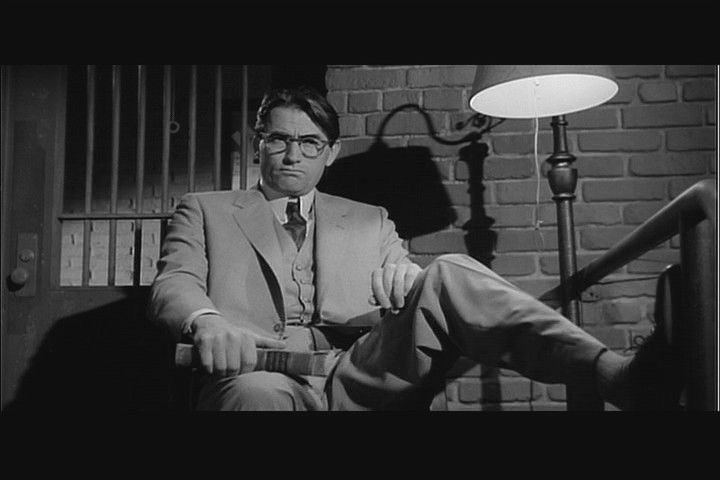
Atticus waits for the arrival of the lynch mob, coming to get their own form of justice from Tom Robinson. He is the embodiment of righteousness.

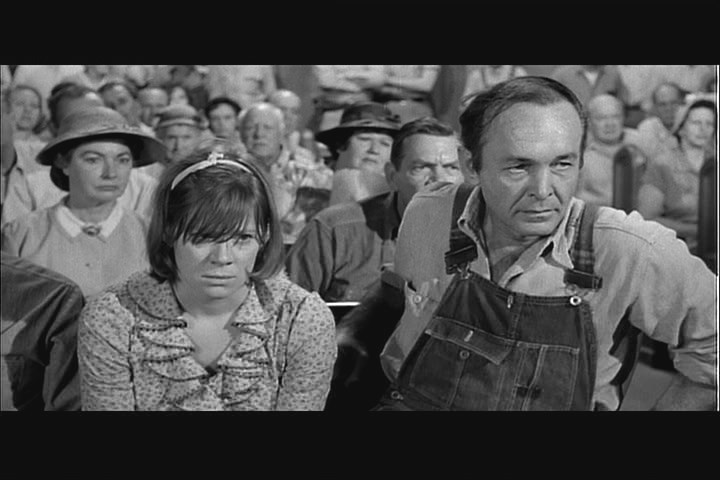
Tom's accusers on the day of the trial.

Tom is portrayed by Brock Peters. I get the feeling his film career never took off, like it should have, due to this part. He is so memorable in the role, he was most likely typecast for many years. He played "Admiral Cartwright" in Star Trek IV: The Voyage Home and Star Trek VI: The Undiscovered Country. He died last August.

Jem, Scout, and Dill sit up in the colored balcony of the courthouse, along with Reverend Sykes.
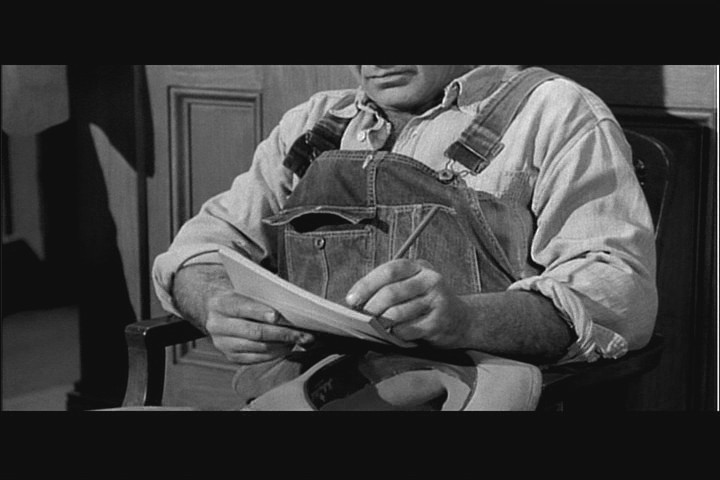
"You got to watch lawyers like Atticus Finch."
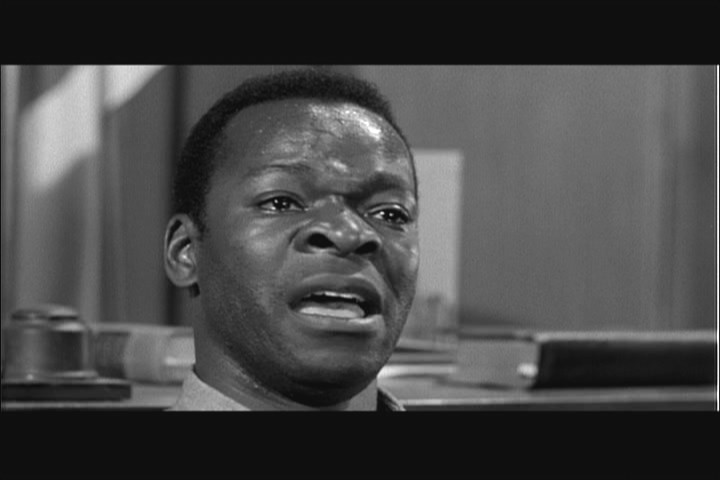
Not the face of a guilty man. Harper Lee, of course, based the character of Tom Robinson on her remembrances of the Scottsboro Boys trials.
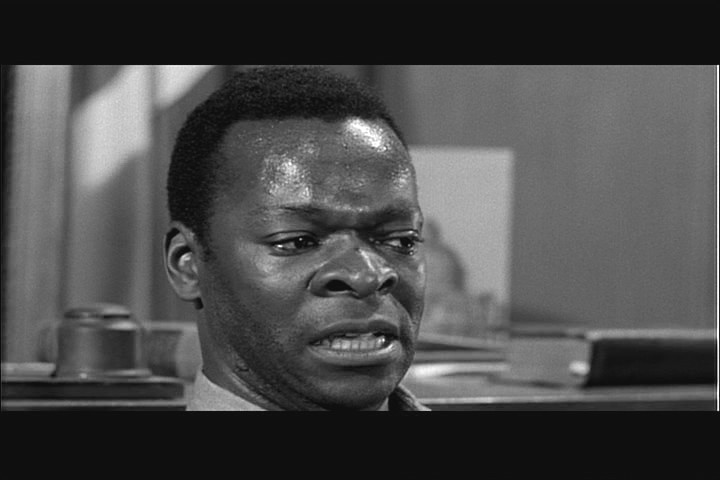
"...one day she ask me to come inside the fence and bust up a chifforobe for her."

Mayella ("a victim of cruel poverty and ignorance") watches Tom's testimony.
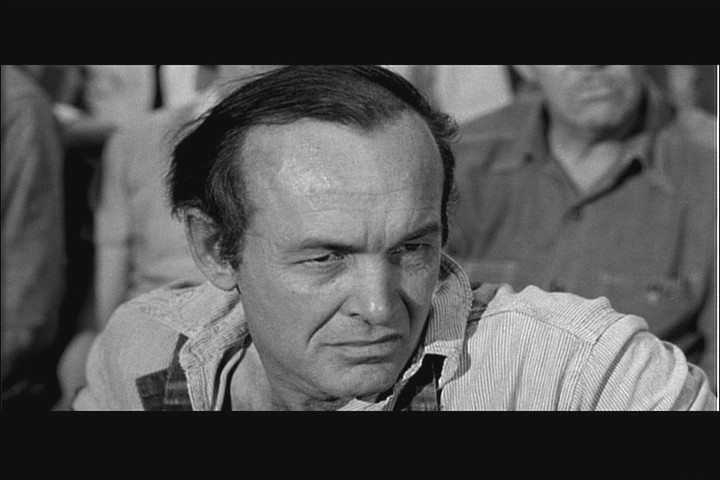
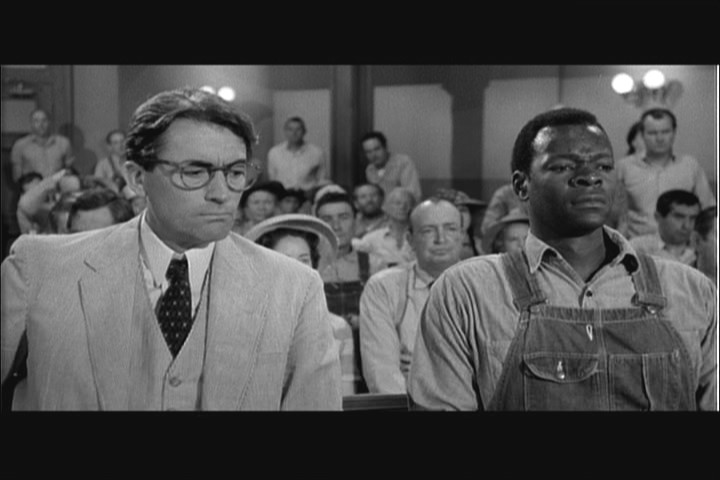
"We find the defendant guilty as charged."
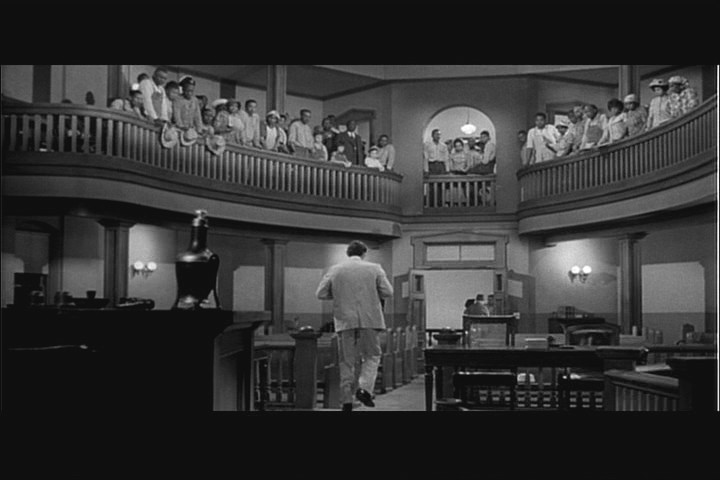
"Miss Jean Louise...Miss Jean Louise. Miss Jean Louise, stand up, your father's passin'."
Jem's childhood innocence is coming to an end.

"There are some men in this world who were born to do our unpleasant jobs for us. Your father's one of them."

Scout is a ham at the county's agricultural products pageant. I take it all the good costumes were already taken?

Jem survives Ewell's attack, thanks to:

"Why, there he is, Mr. Tate. He can tell you his name..."
He looks familiar...
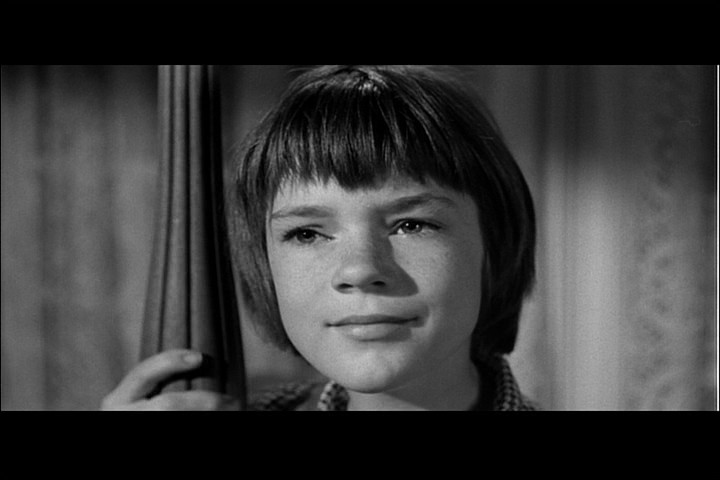
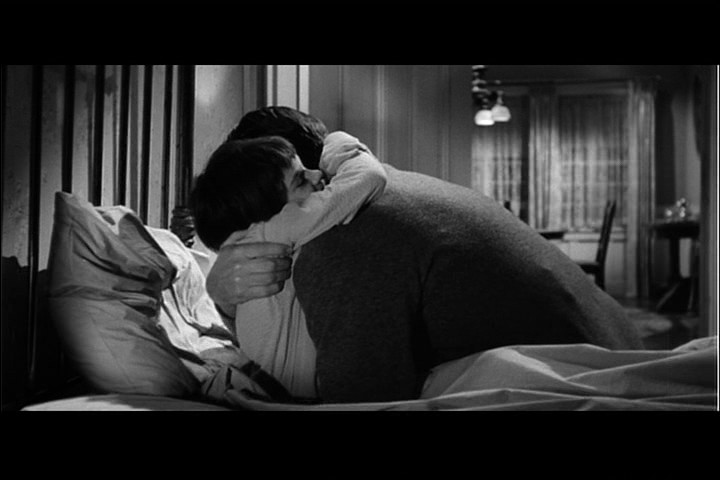
"Hey, Boo."

I'd never noticed until I took this screencap, but there's a portrait of the deceased mother on the mantle.
"The summer that had begun so long ago had ended, another summer had taken its place, and a fall, and Boo Radley had come out. I was to think of these days many times; of Jem, and Dill, and Boo Radley, and Tom Robinson...and Atticus.

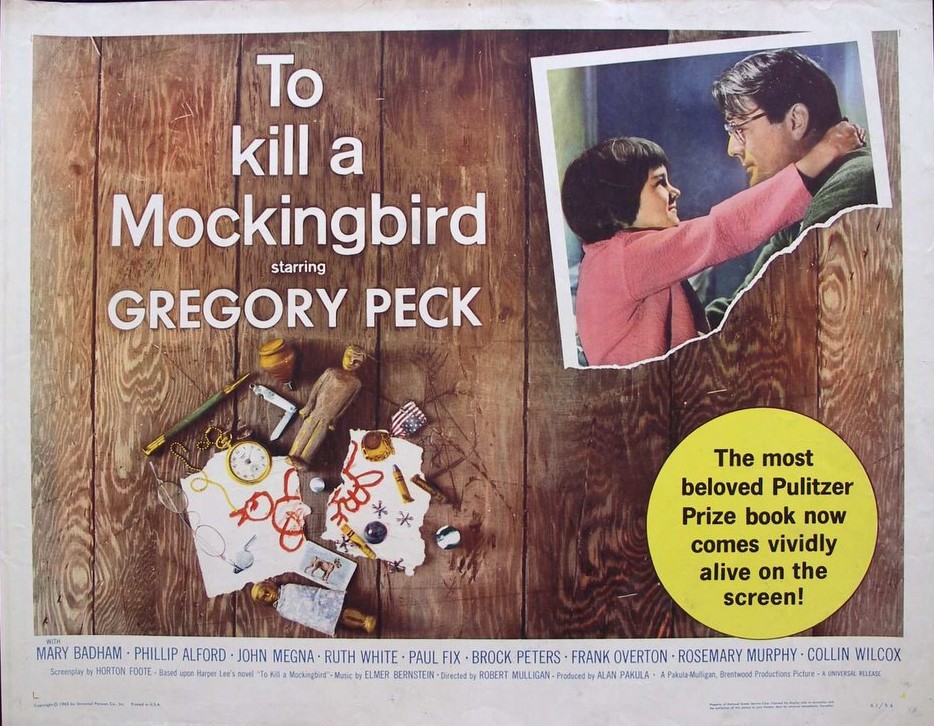
All quotes come from Horton Foote's (a Texas boy!) Academy Award winning screenplay.