January 25, 2008

"Cheek to Cheek"

From the Wikipedia entry:

"Cheek to Cheek" is a song written by Irving Berlin, and first performed by Fred Astaire in the movie Top Hat (1935).

The song is probably most famous for its opening lines, "Heaven, I'm in heaven, and my heart beats so that I can hardly speak..." and was featured in the Astaire-Rogers movie, soon becoming a standard sung by many other artists, including Bing Crosby, Louis Armstrong, Ella Fitzgerald, Eva Cassidy, Doris Day, Jane Monheit and Frank Sinatra.

The song, as sung by Astaire and Fitzgerald, is featured in the movie The English Patient. It is sung by Kenneth Branagh in Love's Labour's Lost. It is also shown being performed in The Green Mile, Rain Man and The Purple Rose of Cairo when Top Hat is being viewed.

Coca-Cola ghost in Knippa, Texas


I knew it was somewhere in Knippa. I saw it in my rearview mirror, pulled off the highway, and walked back to it. The light couldn't have been more perfect:
found it!
William Christenberry perspective:
william christenberry perspective
knippa coca-cola ghost sign
coca-cola ghost in knippa

January 23, 2008

"Return to Pepperland"

"Return to Pepperland" is the title track to a collection of songs Paul McCartney recorded in 1986 and 1987. Phil Ramone was the producer. Most of the songs remain unreleased, while others were re-recorded for later albums. Some were used as CD-single B-sides. A couple ("We Got Married" and "This One") ended up on McCartney's 1989 "comeback" album Flowers in the Dirt.

pic from here

pic from here

Of course, Pepperland is the "cheerful music-loving paradise under the sea, protected by Sgt. Pepper's Lonely Hearts Club Band" (source) in the cartoon Yellow Submarine (1968). I'm not sure about the other tracks on this "unreleased" album, but I love "Return to Pepperland." It's very melodic and reminds me (ironically) more of XTC than The Beatles:

January 22, 2008

Edward Hopper

Self-Portrait (1925-30)

From the Wikipedia entry:

Edward Hopper (July 22, 1882 – May 15, 1967) was an American painter and printmaker. While most popularly known for his oil paintings, he was equally proficient as a watercolorist and printmaker in etching. Born in upper Nyack, New York to a prosperous dry-goods merchant, Hopper studied illustration and painting in New York City at the New York Institute of Art and Design.

Summer Interior (1909)

Hopper made four trips to Europe to study the emerging art scene there, but unlike many of his contemporaries who imitated the abstract cubist experiments, the idealism and detail of the realist painters resonated with Hopper. His early projects reflect the realist influence with an emphasis on color and shape. Eschewing the usual New England subjects of seascapes or boats, Hopper was attracted to Victorian architecture, although it was no longer in fashion. According to Boston Museum of Fine Arts curator Carol Troyen, "He really liked the way these houses with their turrets and towers and porches and mansard roofs and ornament cast wonderful shadows. He always said that his favorite thing was painting sunlight on the side of a house."


A nice mix of Hopper's work to the tune of Glenn Miller's "Tuxedo Junction"

While he worked for several years as a commercial artist, Hopper continued painting with moderate success yet not as much as he yearned for. He sold a variety of small prints and watercolors to tourists and minor publication yet received only a casual if warm response from curators and gallery owners.

The Mansard Roof (1923)

According to Troyen, Hopper's "breakthrough work" was The Mansard Roof, painted in 1923 during Hopper's first summer in Gloucester, MA. His former art school classmate and later wife, Josephine Nivison Hopper, suggested he enter it in the Brooklyn Museum annual watercolor show, along with some other paintings. The Mansard Roof was purchased by the museum for its permanent collection, for the sum of $100.

House by the Railroad (1925)

In 1925 he produced House by the Railroad, a classic work that marks his artistic maturity. The piece is the first of a series of stark urban and rural scenes that uses sharp lines and large shapes, played upon by unusual lighting to capture the lonely mood of his subjects. He derived his subject matter from the common features of American life — gas stations, motels, the railroad, or an empty street — and its inhabitants.

The Sheridan Theatre (1928)

The Night Window (1928)

Another fantastic video, this one with photographs of Hopper at work, with Benny Goodman swing accompaniment.
Photo from this site, which has a fairly complete, alphabetically ordered list (with copies) of his work.

January 19, 2008

Star Trek XI teaser trailer

pic from Ain't It Cool News

The more I read about Star Trek (Star Trek XI), coming out next Christmas, the more I feel like it's going to disappoint (suck). Especially for original original Trek fans, as I most certainly am, I think it's going to be a cringe-inducing travesty, just as the Star Wars prequels were for Star Wars fans. I think the biggest problem with this "new" Star Trek is that, as with the Star Wars prequels, the original cast isn't in it. Leonard Nimoy will appear for an indeterminate amount of time as Spock, so that should dull some of the pain. Yet I can't help but feel a tinge of excitement seeing this excellent, true HD quality teaser trailer in which the construction of the Enterprise is shown (the transporter/alien planet surface sound at the end is a nice touch and made me choke up a little bit):


pic from this site, it shows the men of the Production Model Shop in Burbank, California, with the original model in 1964

at the Smithsonian

January 18, 2008

Hondo, Texas

sleep comes like a drug...
The sign has been around since the 1930s.

hondo motel sign
rexall in hondo
hondo building detail
raye theater
The Raye Theater - still open

side of raye theater
funky cold medina county courthouse
The 1892 Medina County Courthouse, or what I like to call the Funky Cold Medina County Courthouse
hotel armstrong
sun on hotel armstrong neon sign

January 17, 2008

Hollywood or Bust locations

Hollywood or Bust (1956) was the last movie Dean Martin and Jerry Lewis made together. Martin and Lewis apparently didn't speak to each other off camera during the entire film shoot. Jerry Lewis has said this is the only one of his films he has never seen, citing it as too painful to watch.

The guy who produced several of those schlocky, soul-crushing Elvis movies was pulling the strings behind the camera on Hollywood or Bust, but you'd never know it based on the plot synopsis...:

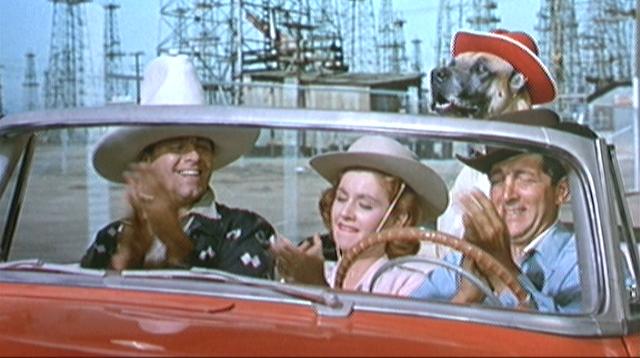
Malcolm Smith (Jerry Lewis) is a movie buff who yearns to go out to Hollywood to meet Anita Ekberg. Steve Wiley (Dean Martin) is a gambler with some bad debts. They both have winning tickets in a car raffle (Steve's is fake), so they share the car and head off to Hollywood along with Malcolm's Great Dane and a girl named Terry (Pat Crowley) that they meet along the way. (from IMDb)

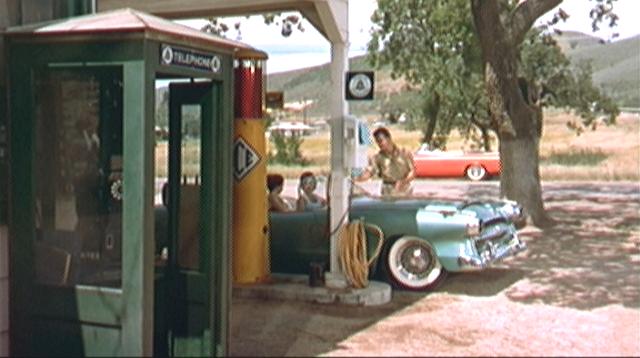
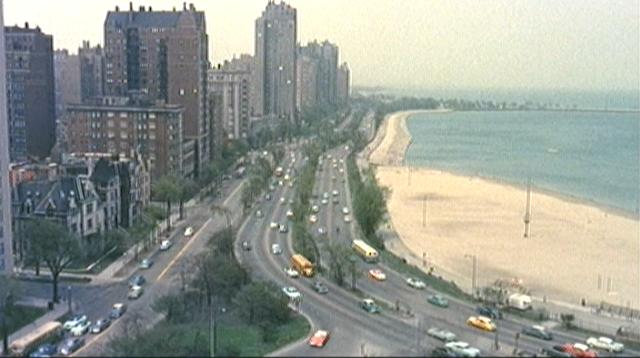
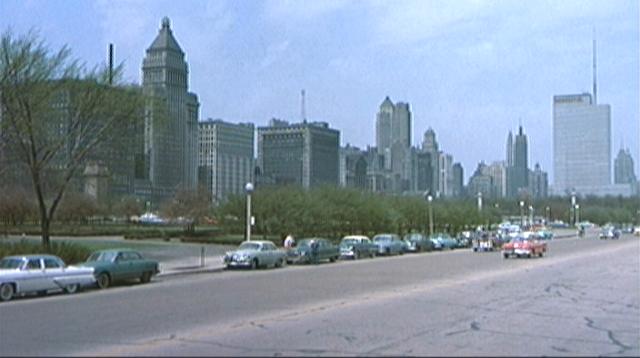
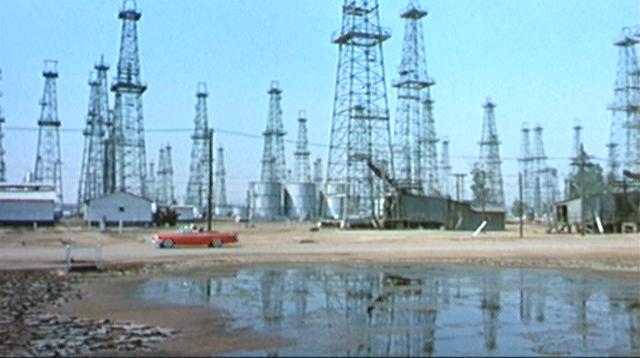
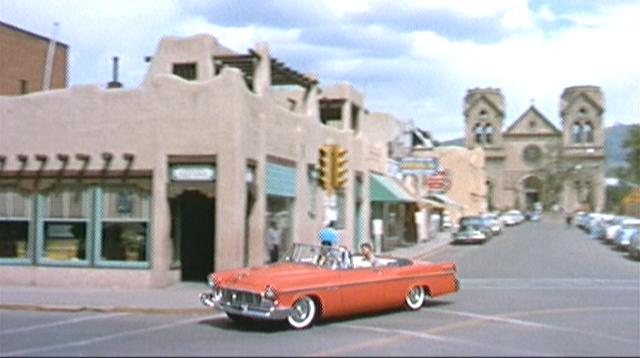
I'd say that's annoyingly contrived, but you know that very same scenario plays out for real across this country each and every day, right? Nonetheless, much of what the characters see, and the filmmakers record, on their unlikely road trip (driving from NYC to Hollywood), has historic value. Obviously the retro appeal is strong. And how I'd love to drive that same route and take about a gazillion pictures. Unfortunately, most of what is seen on the characters' cross-country journey is long gone, so screencaps will have to do.

New Jersey, U.S. 22 - I'm guessing one would see cement parking lots, gas stations and fast food restaurants in the place of those fields, today.


Chicago:


Somewhere in Texas, where everyone wears cowboy hats:


Turning the corner in Santa Fe, New Mexico

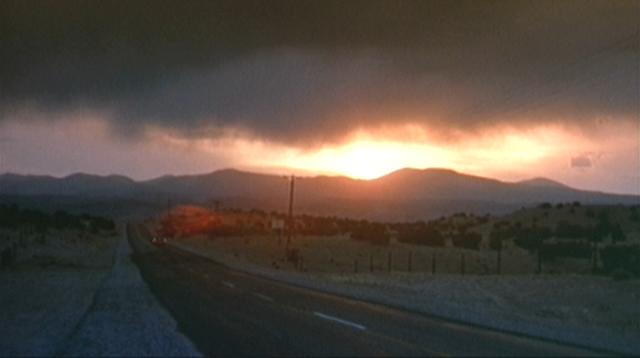
Sunset in the desert - at least those still exist

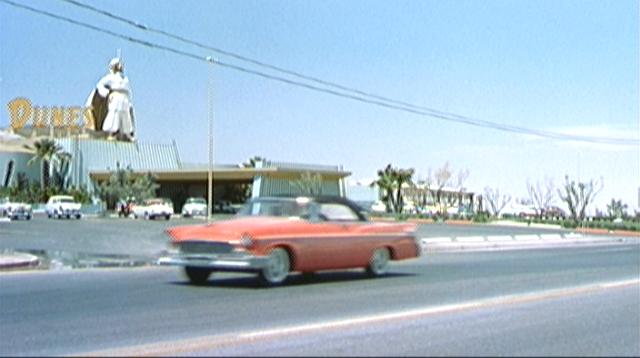
Entering Vegas in 1956:
Dunes Hotel

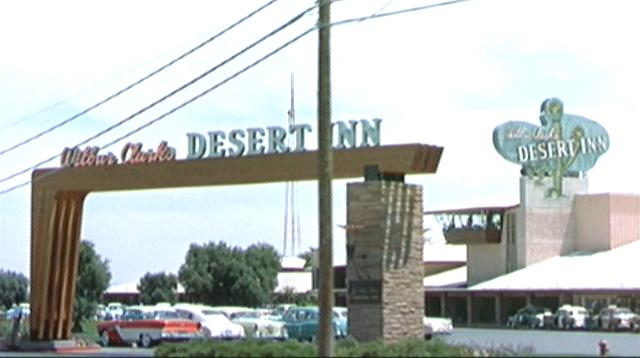
Wilbur Clark's Desert Inn

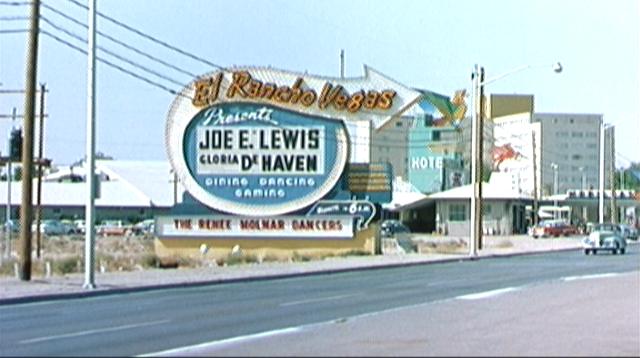
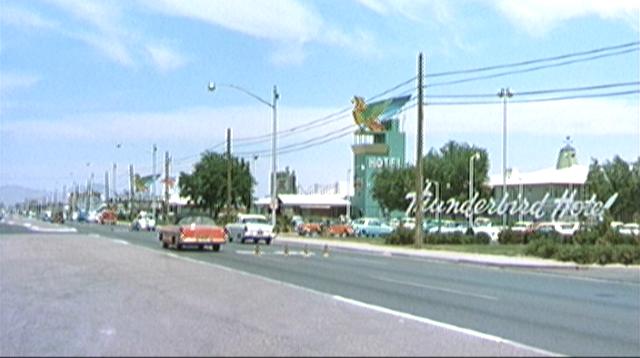
El Rancho Vegas, also, two separate, winged mascots - one for The Thunderbird Hotel, one for a Mobil gas station

Two oft-used quotes about Joe E. Lewis from Sinatra performance monologues: "Show me a bum who can hold his liquor, I'll show you a guy with a bad kidney" and "A friend in need is a pest."
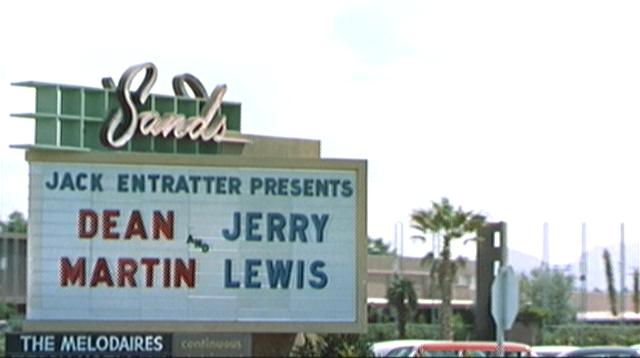
In The Godfather, the scene of the Las Vegas strip, including a shot of the Sands Hotel marquee showing an appearance by Martin and Lewis, was taken from Hollywood and Bust.

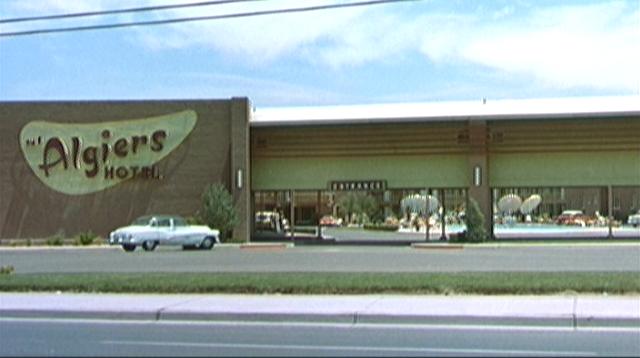
Algiers Hotel

Thunderbird Hotel

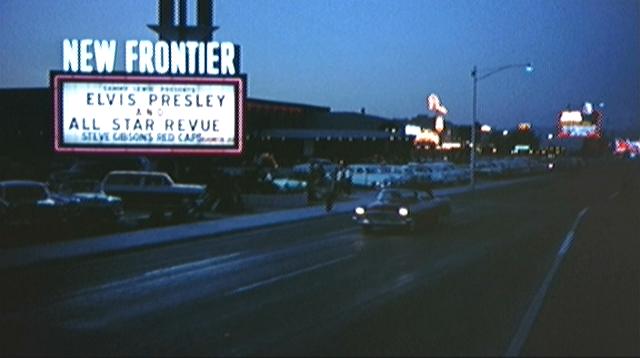
Leaving Vegas at night, passing the old New Frontier Hotel, with the Silver Slipper sign rotating elegantly in the background

Next stop, Hollywood:

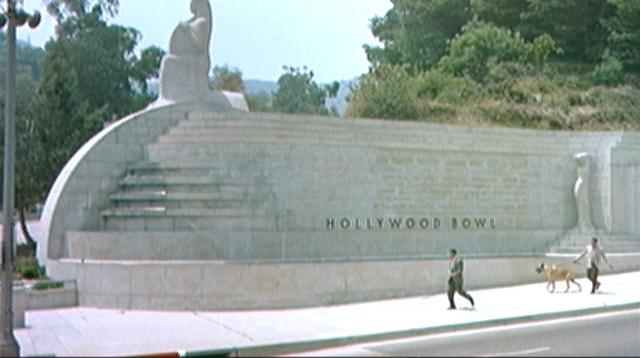
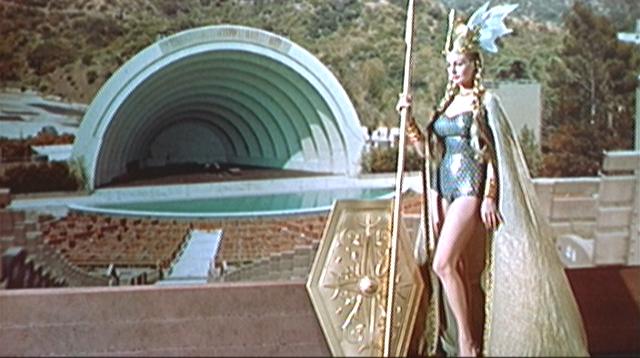
The Hollywood Bowl, also seen during the opening credits sequence:

Anita Ekberg displaying her talent

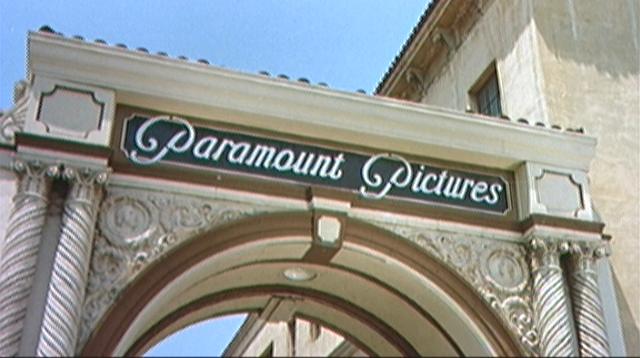
The Bronson Gate in front of Paramount Pictures, where the roadtrip essentially ends, as does this post.