
Showing posts with label To Kill a Mockingbird. Show all posts
Showing posts with label To Kill a Mockingbird. Show all posts
April 28, 2010
Plaza Theater, Wharton

April 21, 2009
Chasing ghosts, fictional and otherwise
 Rereading To Kill a Mockingbird and have just completed the Monroe County Heritage Museum's book, Monroeville: The Search for Harper Lee's Maycomb. Some things still remain in the town in which Nelle Harper Lee grew up.
  This screencap is from the very last scene in the film, and back on the fireplace mantle is a portrait of Atticus Finch's wife, Jem and Jean Louise's (Scout's) mother, who, according to the novel, died of a heart attack when Scout was two-years-old. We all know Harper Lee's father was an attorney, who was morally and ethically similar to Atticus. But did you know Lee's mother also died before her father? Harper Lee's mother (and here is the first bit of "interesting information") was named Frances Cunningham Finch Lee. Of course the novel has a character who is poor farmer named Walter Cunningham, but even neater is the fact the author's mother's maiden name was Finch. A sweet tribute, I'd say.
For years, at least before Al Gore finally invented the Web, fans primarily knew the reclusive author's appearance to be as it was depicted in this photograph included with the novel's first edition (1960), taken by Truman Capote (picture from)...

...or maybe as she has appeared currently, like in this picture of her receiving the Presidential Medal of Freedom in 2007:

So it's a real treat to see a photo of the then chain smoker Harper Lee as a student at the University of Alabama, where she was the editor of the yearbook, Rammer Jammer, during the 1946-47 academic year. This is sometimes what it's like putting blog posts together:

Although perhaps easily mistaken for the prop featured in this touching scene from the film...
..."When Greogory Peck accepted the Oscar for his role in the movie, he had in his hand A.C. Lee's watch, which Harper Lee had given him when her father died." (Monroe County Heritage Museums, p. 15)
 "...Gregory Peck was walking through the airport and he ran into somebody. When he stopped to look at his watch, it was gone. He said he just could hardly stand the fact that he had lost Atticus' watch." (p. 15)

"They say that after the book came out and was so popular, people would ask Mr. Lee to sign the book, and he always signed it 'Atticus.'" (p. 15)
 The house of the "mysterious neighbor" (Boo Radley)? It's on this map of Monroeville/Maycomb. For a fan of the novel, that's some fascinating stuff!
 Finally, the Monroe County Courthouse (c. 1903) would have probably been torn down to make way for a more modern building (as so many courthouses are) had it not been for the novel and film. It has been home to the Monroe County Heritage Museum since 1991.
The courtroom was used as a model for the film's version and is virtually identical.
March 4, 2009
R.I.P. Horton Foote

Horton Foote (March 14, 1916 - March 4, 2009) was an American playwright and screenwriter probably best known for writing the screenplay to the 1962 film, To Kill a Mockingbird, for which he earned an Academy Award. He received the Pulitzer Prize for Drama in 1995 for his play, The Young Man From Atlanta. His other writing credits include Tender Mercies (1983) and The Trip to Bountiful (1985). Two years ago I went to Wharton (his birthplace/hometown) to get pictures of the Plaza Theatre on the last night of its acting company's performance of Foote's "Mockingbird" screenplay. I wondered if he was in attendance that night.

February 26, 2009
Whatever happened to John Megna?

Megna portrayed Dill (Charles Baker Harris) in the 1962 film masterpiece, To Kill a Mockingbird. Dill is Jem and Scout Finch's summer neighbor and friend, and he represents the perspective of childhood innocence throughout Harper Lee's novel.
 He would reappear on my own personal cultural radar in season one of Star Trek, in the episode "Miri," originally broadcast on October 27, 1966 (two days after I was born). Though credited as "Little Boy," many no doubt think of him best as being the "bonk bonk on the head" kid.


After "cameo" roles (putting it nicely) in both Smokey and the Bandit II and Cannonball Run, I guess John figured the acting game was up, and he became a high school English teacher, last teaching at James Monroe High School in North Hills, CA. On September 5, 1995, in Los Angeles, California, he died from AIDS-related complications (damn, you hate to see that) at the age of 42 (source).

January 12, 2007
Harper Lee
 A Montgomery, Alabama, high school's performance of a play based on Harper Lee's classic To Kill a Mockingbird drew out the novel's reclusive author, herself.
 Alex Trulock, 16, in costume as 'Dill,' pauses backstage, Wednesday, Jan., 10, 2007, at the Davis Theater in Montgomery, Ala., prior to the evening's performance of 'To Kill A Mockingbird'. Trulock and his fellow high school student cast members will be meeting with the play's Pulitzer Prize winning author Harper Lee following the show. (AP Photo/Kevin Glackmeyer)
 I love Harper Lee because of her reclusiveness (what a rare thing these days; she's a true artiste), obviously, because of the beautifully written novel (the only book she has ever published), and the Truman Capote connection, which is just so bizarre, yet cool (I'm aware they were childhood friends and neighbors; they just seem so different; she truly is Scout). I have much respect for the lady.
 I already expressed my feelings about the the film version in a previous post, but I think it is one of the greatest movies ever made (with screenplay by Texan Horton Foote).
 The Elmer Bernstein soundtrack is perfect (the title track, "Scout's Theme," can make me weep). And the opening credits sequence by Stephen Frankfurt is one of the best used in any film. Judge for yourself:
February 10, 2006
A boy named Boo
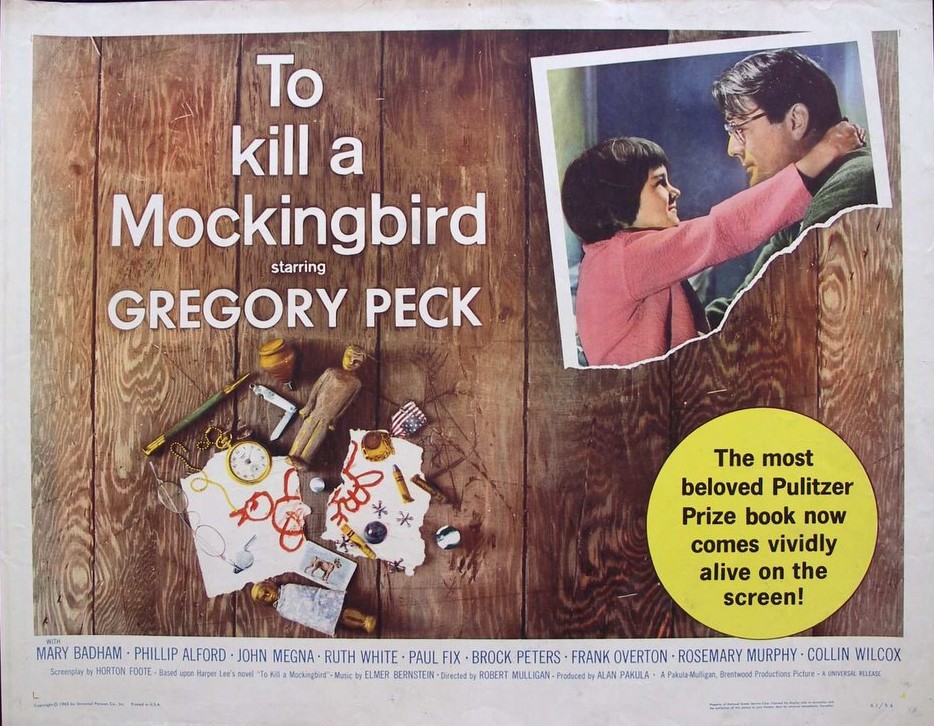
Harper Lee's first and only novel, To Kill a Mockingbird, was published in 1960. The classic novel is based on Lee's childhood in Monroeville, Alabama. The film version came out two years later. If you've never read the novel or seen the film, be aware, there are major spoilers ahead. I wouldn't want to ruin it for anyone.

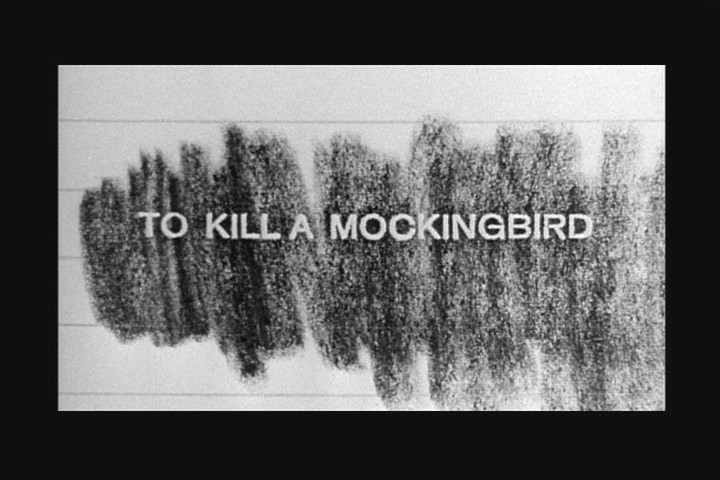


Here is the superb opening title sequence, with the moving theme from composer Elmer Bernstein (the entire soundtrack is worth checking out).

"Maycomb was a tired old town, even in 1932...when I first knew it. Somehow, it was hotter then. Men's stiff collars wilted by nine in the morning. Ladies bathed before noon and after their three o'clock naps. And by nightfall they were like soft teacakes with frosting from sweating and sweet talcum. The day was twenty-four hours long, but it seemed longer. There's no hurry, for there's nowhere to go and nothing to buy...and no money to buy it with. Although Maycomb County had recently been told that it had nothing to fear but fear itself.
That summer, I was six years old."
There's something very moving about the narrator's read of those lines. It never fails to get me choked up.
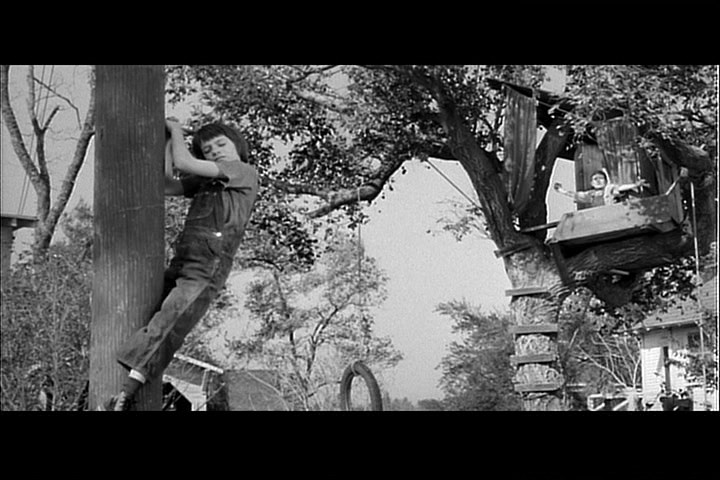
"I'm having a terrible time, Miss Maudie. Jem is staying up in that tree until Atticus agrees to play football for the Methodists..."
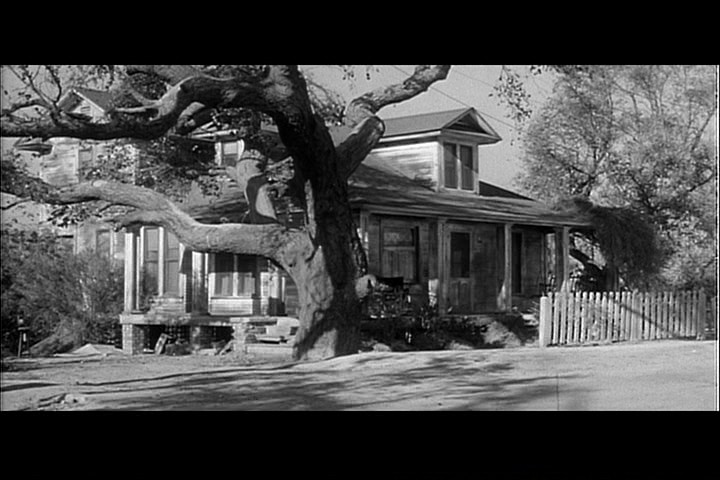
The Radley house, by day--"The house is low and was once white with a deep front porch and green shutters. But it darkened long ago to the color of the slate-gray yard around it. Rain-spotted shingles droop over the eaves of the veranda. Oak trees keep the sun away. The remains of a picket fence drunkenly guard the front yard. A 'swept' yard that is never swept, where Johnson grass and rabbit tobacco grow in abundance."

"Atticus, do you think Boo Radley ever comes and looks in my window at night?"


Atticus, played by Gregory Peck. Now that was a movie star. Atticus was selected by the American Film Institute a couple of years ago as the number one film hero in cinema history. Atticus is everything a man should aspire to be. I love Atticus.
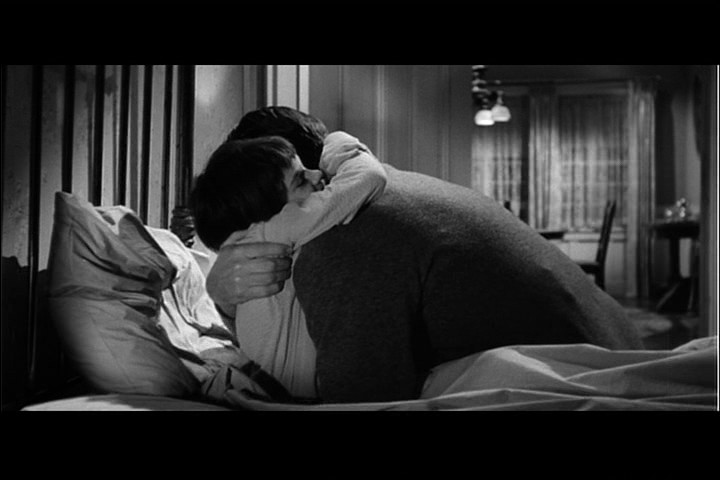
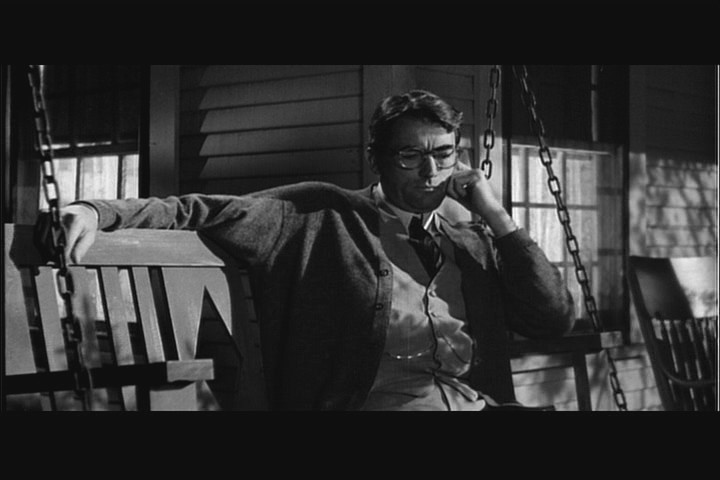
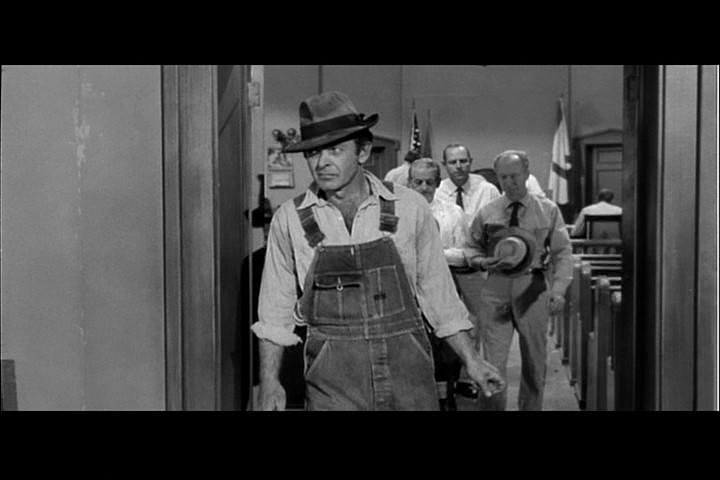
Robert E. Lee Ewell, "a short, bantam cock of a man" (cue "The Imperial March" [Darth Vader's theme])
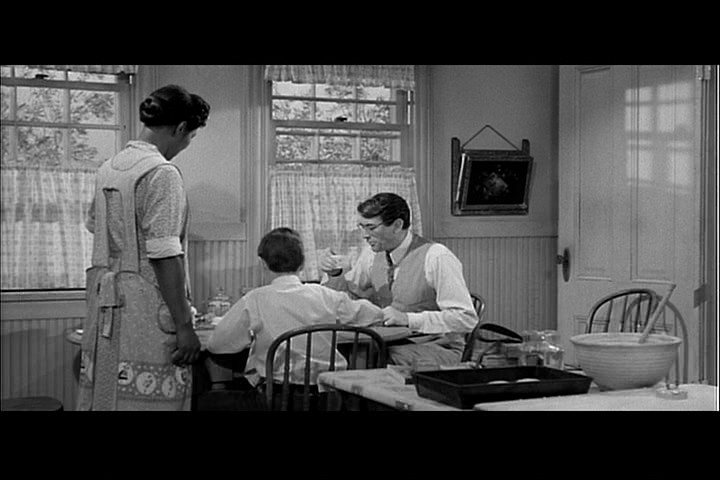

"I still don't know why I have to wear a darn old dress."

Jem discovers tree treasure.
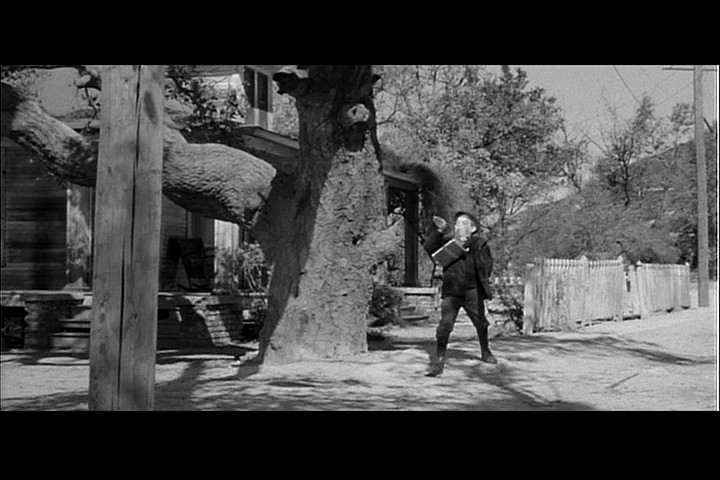
Scout: What are you doing?
Jem: Walking like an Egyptian. We were studyin' about them in school. Teacher says we wouldn't be no place without them.
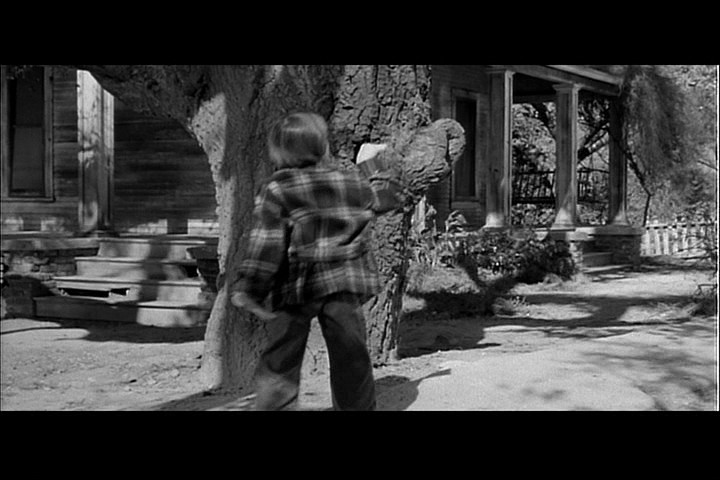
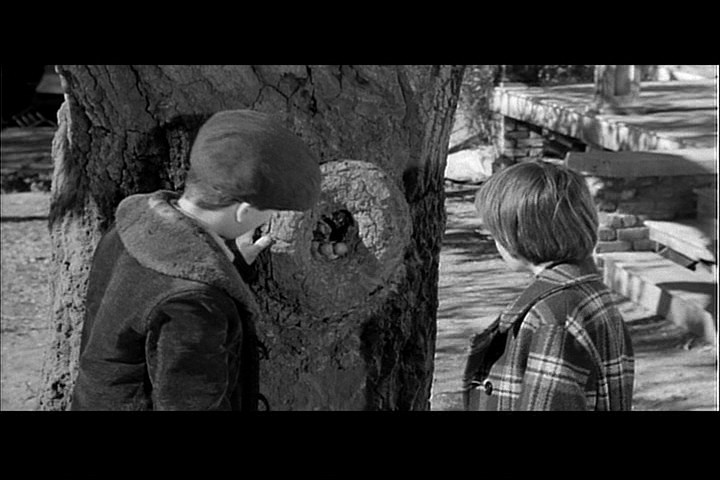
"Look, Jem."

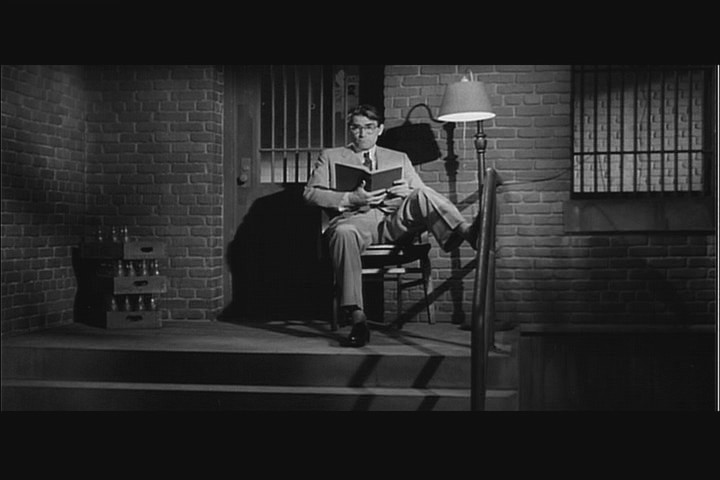
Motivated by an inherent sense of, and duty to, that which is "right",
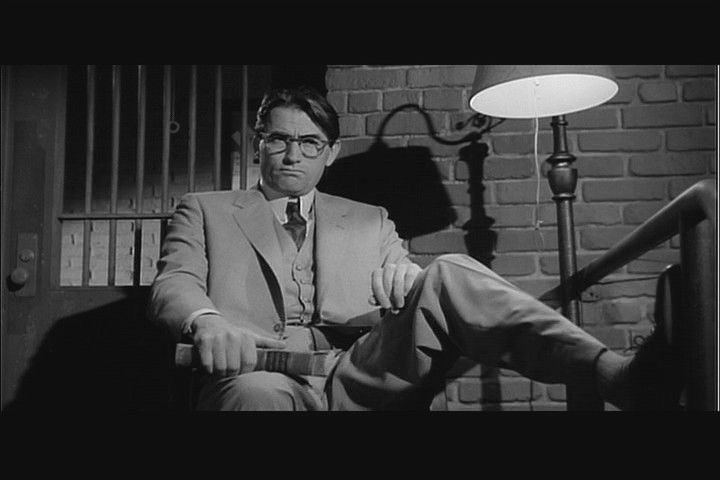
Atticus waits for the arrival of the lynch mob, coming to get their own form of justice from Tom Robinson. He is the embodiment of righteousness.

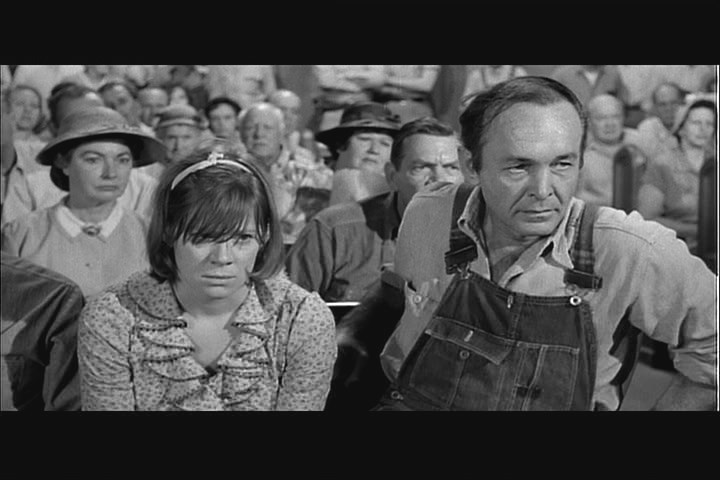
Tom's accusers on the day of the trial.

Tom is portrayed by Brock Peters. I get the feeling his film career never took off, like it should have, due to this part. He is so memorable in the role, he was most likely typecast for many years. He played "Admiral Cartwright" in Star Trek IV: The Voyage Home and Star Trek VI: The Undiscovered Country. He died last August.

Jem, Scout, and Dill sit up in the colored balcony of the courthouse, along with Reverend Sykes.
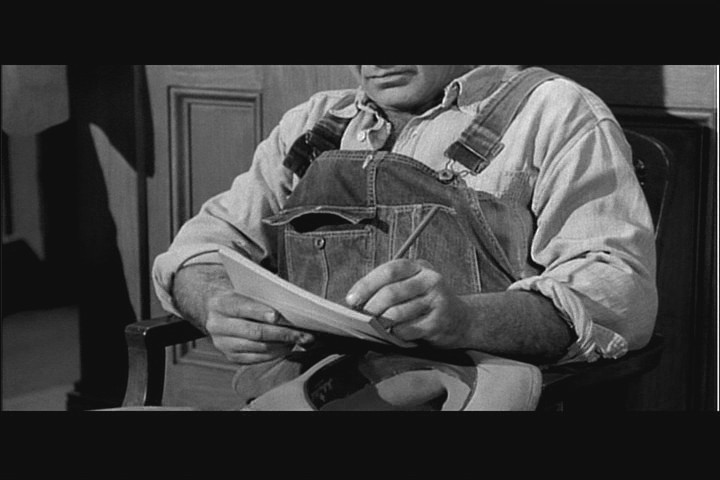
"You got to watch lawyers like Atticus Finch."
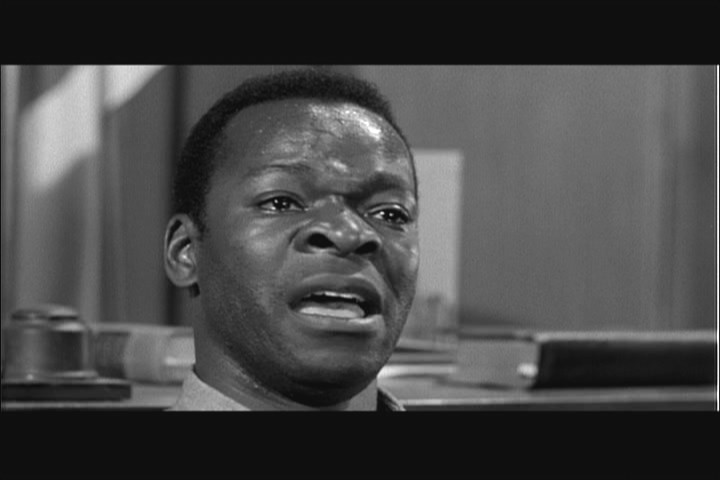
Not the face of a guilty man. Harper Lee, of course, based the character of Tom Robinson on her remembrances of the Scottsboro Boys trials.
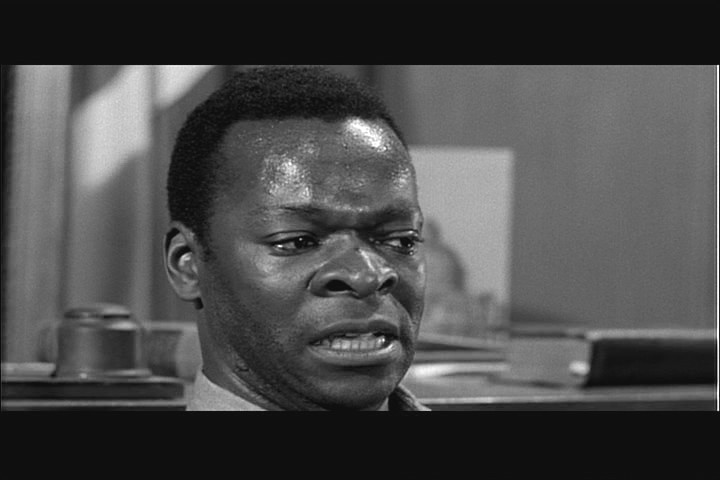
"...one day she ask me to come inside the fence and bust up a chifforobe for her."

Mayella ("a victim of cruel poverty and ignorance") watches Tom's testimony.
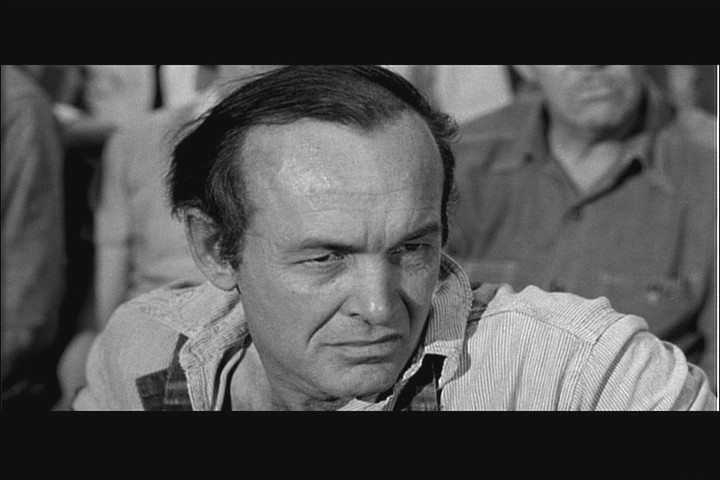
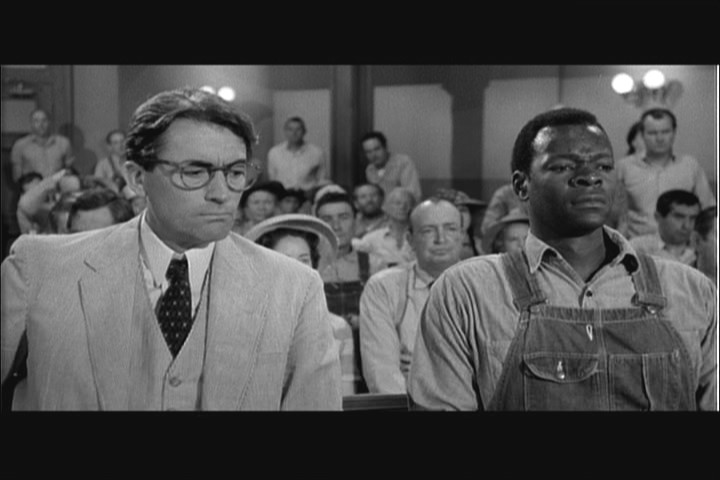
"We find the defendant guilty as charged."
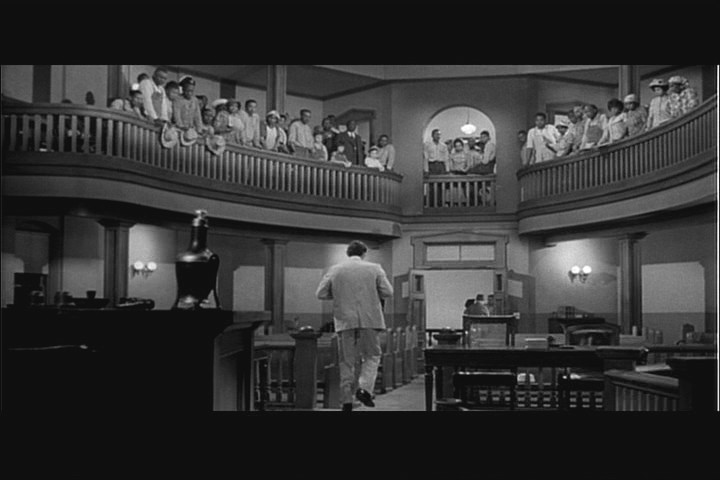
"Miss Jean Louise...Miss Jean Louise. Miss Jean Louise, stand up, your father's passin'."
Jem's childhood innocence is coming to an end.

"There are some men in this world who were born to do our unpleasant jobs for us. Your father's one of them."

Scout is a ham at the county's agricultural products pageant. I take it all the good costumes were already taken?

Jem survives Ewell's attack, thanks to:

"Why, there he is, Mr. Tate. He can tell you his name..."
He looks familiar...
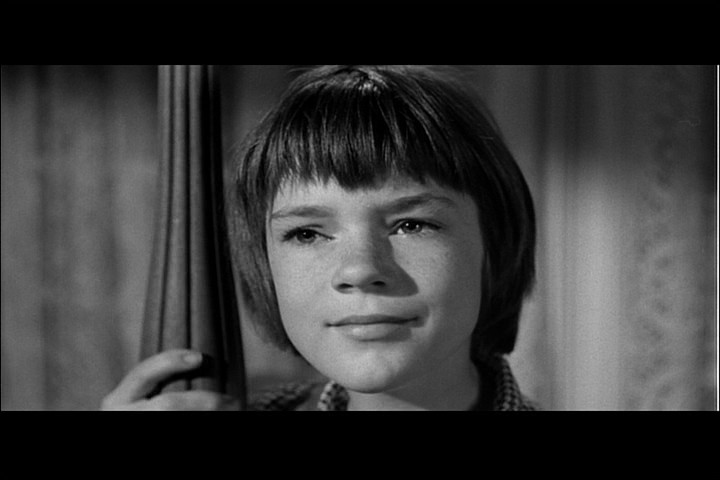
"Hey, Boo."

I'd never noticed until I took this screencap, but there's a portrait of the deceased mother on the mantle.
"The summer that had begun so long ago had ended, another summer had taken its place, and a fall, and Boo Radley had come out. I was to think of these days many times; of Jem, and Dill, and Boo Radley, and Tom Robinson...and Atticus.

All quotes come from Horton Foote's (a Texas boy!) Academy Award winning screenplay.
Subscribe to:
Posts (Atom)