
Showing posts with label Nelson Riddle. Show all posts
Showing posts with label Nelson Riddle. Show all posts
May 24, 2011
"On the Street Where You Live"

April 21, 2011
"I Like to Lead When I Dance"

Just another day in Sinatraland.
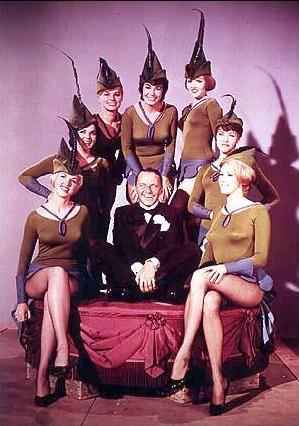
A swellegant, elegant track from Robin and the 7 Hoods, unreleased and unheard until 2002, "I Like to Lead When I Dance" was written by the great songwriting team behind so many of Sinatra's notable tunes, Sammy Cahn and Jimmy Van Heusen.
November 19, 2010

December 19, 2009
"Night Lights"
 I'd never heard of this Nat King Cole recording, from a 2001 re-release, but it's one of those times where, although I've never heard the song before (I don't think), it sounds utterly familiar. It's a 2001 rerelease of this material, featuring the singer's (and Frank Sinatra's) arranger/conductor, Nelson Riddle. Perhaps that's why this sounds so familiar to me. Whatever is the case, I just love this kind of stuff. It's so elegant and delicate, yet it swings like a mother. I think if I could go back in time to any place in the 20th century, I think it would be this era.
There is no Wikipedia entry for it, but the Amazon description is as follows:
Night Lights is the Nat "King" Cole album that time forgot. Recorded with Cole's regular musical director Nelson Riddle over Christmas and New Year of 1955-1956, it's never been released complete until now. This is Cole as pop singer rather than jazz pianist, and while the album is only now making its debut on this 24-bit digitally mastered CD, several numbers were released as singles and became chart hits: "Too Young to Go Steady," "To the Ends of the Earth," and "Never Let Me Go." That still leaves 12 cuts which have never been issued before, and as these were all brand-new songs at the time, that makes them world premiere recordings. The nostalgic "Sometimes I Wonder" plays virtually as a trial run for Cole's classic take on "Stardust," while "Once Before" and "I'm Willing to Share This with You" add ethereal voices in distinctive 1950s Hollywood style. Impeccably produced, with sophisticated arrangements by Riddle that balance lush strings, subtle rhythms, and instrumental colors from instruments such as flutes and celesta, this is warm-hearted, tender, and glowingly romantic music. Though they don't match the very best in Nat "King" Cole's catalog, these 20 ballads still make a fine album. They sat on the shelf for decades but the restored sound is first rate.
May 27, 2009
Sinatra sings for Nixon


Sinatra was essentially "born" a Democrat. His brash, foul-mouthed and aggressive mother, Dolly, who campaigned for Al Smith, was a Democratic Party ward boss in Hoboken, New Jersey.
 Of course, the singer's affiliation with, and support for, John F. Kennedy before, during, and after the 1960 presidential campaign (against Richard Nixon) is the stuff of legend. According to my personal Sinatra "Bible," J. Randy Taraborrelli's, Sinatra: Behind the Legend, during 1960, "...Frank Sinatra continued his diligent campaign for Kennedy with performances and donations and also by hiring a private investigator to see what kind of dirt he could dig up on Richard Nixon, which, as it would turn out, was not much" (p. 230).
 The caption for this Life magazine photo, taken in Beverly Hills, 1960: "Singer Frank Sinatra talking with Edward M. Kennedy (Center R) at 'Key Women for Kennedy In California' rally."
Ha, ha, ha - I wonder if Judith Exner was there?

Sinatra would stump for Hubert Humphrey in 1968 (against Richard Nixon). But by Thanksgiving of 1971, it would appear a political shift had occurred, as he "played host for three days to Spiro Agnew and his family...Sinatra and Agnew had forged a close friendship; in fact, Sinatra was determined to see Agnew president in 1976..." (Taraborrelli, p. 390). The "official" cause for Sinatra's political about face was Richard Nixon's position on admitting China to the United Nations, an issue about which he agreed and had been vocal. So, although "he had been extremely critical of Nixon in the past, Sinatra would now become his strongest supporter, contributing $50,000 to his campaign for reelection in 1972...Many of Frank's friends were angry with him for supporting Nixon and the Republican Party" (Taraborrelli, p. 391).

So, I suppose the world has China to thank for the following marvelous, live Sinatra performance (the original point of the post, I swear to goodness...). He was invited to sing at the White House when the Italian prime minister, Giulio Andreotti, visited in April 1973. The video features the singer doing the Nelson Riddle arrangement from The Concert Sinatra (1963) of "I Have Dreamed." This was during Frank Sinatra's brief "retirement" period and proves he hadn't yet lost his pipes (see 2:17 onward). Nixon is supposed to have said afterwards: "Once in a while, there is a moment when there is magic in the room--when a great performer, singer, and entertainer is able to capture us all. Frank Sinatra did that tonight." But Nixon was known to lie from time to time, so don't take his word for it, see for yourself:
UPDATE 5/2011: Video is gone, I'm afraid. Couldn't find a replacement. :(
Will fix it as soon as I can.
April 3, 2009
"I Couldn't Care Less"

For some reason, this Frank Sinatra tune is fairly obscure. There's no Wikipedia entry, for example. And there is no mention of it in one of my primary Sinatra reference texts I sometimes use when I do these Sinatra posts, Will Friedwald's marvelous Sinatra! The Song Is You (I learned so much about him in that book). That's really unusual. I find this very hard to believe, because not only is the melody pretty good, the singer's performance of it is about perfect. He just nails it. I heard "I Couldn't Care Less" for the first time on the The Capitol Years "Best Of" CD set. His performance is particularly moving during the repeat of the lyric "For without the warmth or your caress, it's a cold and dreary world I guess" -- that's athleticism in singing is what that is. The tune is one of many written by Sammy Cahn and Jimmy Van Heusen Sinatra recorded over his long career. The internal rhyme in this one is particularly nice, so thank you Sammy Cahn. I like it, I like it a lot. Recorded on October 15, 1958, but not released commercially until 1973 (even then with a limited release), here's "I Couldn't Care Less":
Based on the heavy use of flutes, I'd say this is a Nelson Riddle arrangement.
March 10, 2009
Fantastic live Sinatra performance

April 21st, in Tokyo
After being "snubbed" by President Kennedy (Chicky Baby) early in 1962, Frank Sinatra decided he needed to improve his image, so he embarked upon what was called the "World Tour in Aid of Children's Charities." It was thirty dates in two months, starting on April 15 in Mexico City and ending June 17 in Monte Carlo. The June 5 performance in Paris was released in 1994 on the excellent Sinatra & Sextet: Live in Paris album.
Guitarist Al Viola stated in the liner notes of the album that, since the band was gathered on such short notice, they never rehearsed with Sinatra for the tour. Much of the band had already performed with him on previous albums with the same arrangements, so he never felt rehearsals were necessary. (Wikipedia)
One of the songs from the band's repertoire which was not included on the Sinatra & Sextet: Live in Paris disc is "The Moon Was Yellow." According to Sinatra! The Song Is You, this version is scaled down from an arrangement Sinatra and Nelson Riddle used in 1958, it being based upon Billy May's arrangement of "April in Paris" (from 1957's Come Fly with Me!). This is the performance of it the singer (& sextet) did at Royal Festival Hall on June 1st, 1962:
Around 2:14 - wow! A lesson learned from Tommy Dorsey
February 13, 2009
"You're Getting to Be a Habit with Me"
"You're Getting to Be a Habit with Me" was written by Harry Warren in 1932, with lyrics by Al Dubin. It appears in the 1933 musical 42nd Street, and is sung by Bebe Daniels:
The song was inspired by one of the women working at the Warner Brothers studio, who when asked why she was still dating a certain man, said that he was getting to be a habit with her (source). So I suppose Warren or Dubin were within earshot.
Here are Frankie Avalon and Vikki Carr doing a respectable job of it on a 1965 episode of the short-lived sitcom The Bing Crosby Show:
Frankie is clearly channeling another version, by another Frankie, my favorite recording of "You're Getting to Be a Habit with Me," the one on Sinatra's 1956 classic album, Songs for Swingin' Lovers!.
 This is one of those fantastic Sinatra/Nelson Riddle collaborations. I just love Riddle's cool, breezy arrangement, with its lush strings, vibes, those "Riddle flutes," and the playing of trumpeter Harry "Sweets" Edison. I've read somewhere Sinatra mandated that Edison should have his own microphone during the recording of Songs for Swingin' Lovers!, and it's easy to hear why on tracks such as this one. Longtime fans would have a hard time imagining many of Sinatra's recordings without Edison's playing.
September 11, 2008
"September in the Rain"
 Written in 1937 by Harry Warren and Al Dubin, when leaves would actually turn brown as early as September on the North American continent, "September in the Rain" is probably the best song on one of my favorite Sinatra albums, Sinatra's Swingin' Session!!! (I love the exclamation points!!!). It is the centerpiece of the album and a great example of Nelson Riddle's style as an arranger.
And as a bonus, here are the Silver Beetles (John, Paul, George, and Pete Best) doing a version that can't even begin to compare with Sinatra/Riddle's, but at least it's an original interpretation. This is supposedly from an audition the group did for Decca Records. Yep, guitar groups were on their way out:
July 30, 2008
"The Continental"

"The Continental" was written by Con Conrad with lyrics by Herb Magidson and was introduced by Ginger Rogers in the 1934 film The Gay Divorcee (snicker). "The Continental" won the first Academy Award for Best Original Song to be awarded. Here is the scene in which it was used:
A way of dancing that's really ultra-new!
Comedian Allan Sherman performed "The Painless Dentist Song," a parody of the tune, and it was also used in a 1980's television commercial in the United Kingdom for Herta Frankfurters:
The lyrics so you can sing along at home, especially my U.K. visitors!:
"The continentals like their furters, and Herta's one they really like.
They like to grill them, it always thrills them, go on, take a bite.
Cold in the salad, or from the barbie, microwave them they're always out of sight.
For baked potatoes, just heat them, they're really wild with rice.
They make a feature on a pizza, make hot dogs very nice..."
You are welcome (in advance!) for that. Nelson Riddle applied his "rhythm of the heart" to it for the Sinatra version from the Chairman's 1964 album, Days of Wine and Roses, Moon River and Other Academy Award Winners.
 Another Sinatra arranger, Billy May, has a similarly swingin' version on Big Fat Brass.
 And of course the wildly romantic sentiment of the lyric and the dashing bravado of the melody inspired the recurring Saturday Night Live skit with Christopher Walken, appearing as simply, "The Continental":
July 22, 2008
"Theme from Route 66"

It was on TV for four seasons(!), but I've gotten the impression from what I've read about it and things my Dad (who watched it only because of the Corvette) has said that Route 66 was average at best. I've only caught glimpses of it when it was on Nickelodeon. But what a theme song! I love this tune. It can turn me into a finger snappin' fool. It's like one of the last, great gasps of the Big Band Era (The Beatles are coming very soon, America!). The production on it is so clear and pristine, melodically it's very cool, and it swings like a mother. No wonder, it's Nelson Riddle.
From the Wikipedia entry:
Nelson Riddle was commissioned to write the instrumental theme when CBS decided to have a new song, rather than pay royalties for the Bobby Troup song "(Get Your Kicks on) Route 66." Riddle's theme, however, offers an unmistakable homage to the latter's piano solo (as originally recorded by Nat King Cole) throughout the number. Riddle's Route 66 instrumental was the first television theme to make Billboard Magazine's Top 30, and earned two Grammy nominations in 1962 (yay! for Nelson).
Here's the song, with slideshow accompaniment of beautiful things along Historic Route 66:
June 19, 2008
A scene from Pal Joey
 There's a great scene early on in Pal Joey (1957) in which Frank Sinatra (as Joey Evans) does an impromptu audition for the owner of a nightclub. Sinatra begins crooning "I Didn't Know What Time It Was" (and it sounds like he's singing live on the soundstage, accompanying his own pre-recorded part). Then, sensing the nightclub owner's disenchantment with his performance, Sinatra signals the conductor, and the band starts to swing. That beat is Nelson Riddle's "heartbeat rhythm" -- the tempo he and Sinatra implemented so effectively on classic albums such as Songs for Swingin' Lovers (1956), A Swingin' Affair! (1957), and more(!!!). Riddle was the musical director for the film, so it only makes sense. That scene:
 As you can see by the embedded video screen cap, that's Robert Reed in his first, albeit uncredited, movie role. When you begin your acting career in a scene in which Frank Sinatra sings directly to you, there's probably nowhere to go but down.
 It's the "Dere's sumpin' wrong wit his troat" guy from Robin and the 7 Hoods! He must have been a Sinatra pally, because his IMDb entry is brief, with appearances primarily in Sinatra vehicles.
May 13, 2008
"Ebb Tide"
 From the Wikipedia entry:
"Ebb Tide" is a popular song, written in 1953 by lyricist Carl Sigman and composer Robert Maxwell.
It has been recorded many times, the best-known versions include those by Frank Chacksfield & His Orchestra (1953), a successful vocal cover in the same year by Vic Damone, Frank Sinatra (1958), The Platters (1960), Lenny Welch (1964) and the Righteous Brothers (1965). The Righteous Brothers' version was arguably the most successful, peaking at #5 in the US.
Here is that beautiful Righteous Brothers rendition:
 But as is usually the case, if there is one, I'm rather partial to the Sinatra version. From the Chairman's "suicide album," Frank Sinatra Sings for Only the Lonely, conductor/arranger Nelson Riddle perfectly replicated the sound and rhythm of tidal ebb and flow, with help of an orchestra, of course. Obviously, Frank nailed it, emotionally.
February 27, 2008
"Luck Be a Lady"
 "Luck Be a Lady" was written by Frank Loesser for the musical Guys and Dolls. The musical opened at the 46th Street Theatre on November 24, 1950. It eventually became the fifth longest-running Broadway musical of the '50s.
 In a classic, hilarious example of miscasting, Marlon Brando (portraying Sky Masterson) "sang" the song in the 1955 film version. Frank Sinatra, cast as Nathan Detroit in the same film, took to calling Brando "Mumbles" during and after filming. Now, why would he have done that?....
 Later, it became a signature song for Sinatra, first released on the album Reprise Musical Repertory Theatre. One of the best recorded live versions he did that I'm aware of was for the 1966 TV special, Frank Sinatra: A Man and His Music Part II. This is live television, with Nelson Riddle conducting. Frank (and orchestra) really tear it up(!):
swingin'!

October 10, 2007
Songs for Young Lovers
 From Wikipedia:
Songs for Young Lovers is a 1954 album by Frank Sinatra, his first released for Capitol Records. It was released as a 10" LP as a set of eight songs.
The tracks were conducted by Nelson Riddle, the sessions for this album and the preceding singles ("I've Got the World on a String" and "From Here to Eternity") initiating a long-standing collaboration between the arranger and singer that would continue for the next twenty years. All the arrangements, except for Riddle's own "Like Someone in Love," were by Sinatra's uptempo man from his days at Columbia Records, George Siravo, whose charts Sinatra had continued to use in recent club appearances.
A continuation of his philosophy at Columbia, only this time Sinatra had greater cooperation from his new label in the person of producer Voyle Gilmore, who agreed the new album format should be an event, songs arranged around a specific theme or concept. In addition, the state-of-the-art Capitol studios were capable of producing a more detailed sound, which gave Riddle more freedom in his arrangements and orchestrations.
The first song on side one, "My Funny Valentine" (by Richard Rogers and Lorenz Hart):
Last song on side two, "Violets for Your Furs" (by Matt Dennis and Tom Adair):
August 21, 2007
"The Way You Look Tonight"
 Apart from "Wave," my other favorite Sinatra recording would have to be "The Way You Look Tonight," which he did for the Frank Sinatra Sings Days of Wine and Roses, Moon River and Other Academy Award Winners album in 1964. The vocal on it is one of the best examples of the more swinging, jazzy style indicative of his 1960s Reprise Records period. One way to describe it is Sinatra would sing just ahead of or slightly behind the beat. Comedian Tim Conway described Sinatra's style by using "Row, Row, Row, Your Boat" as an example. Whereas most people would simply sing "row, row, row, your boat...," Sinatra would do "row, (pause) row, row your boat," or some variation of that.
  Sinatra took this technique to its extreme on "The Way You Look Tonight," leaving out entire words, such as on the last verse, wherein instead of "Yes you're lovely," he simply sings "Love-ly." A jazz trumpeter named Zeke Zarchy said: "Once while I was driving I heard an old record by Frank and Nelson (Nelson Riddle), and I had to get out of the car and call the radio station...It was 'The Way You Look Tonight,' the greatest thing I ever heard! I defy any instrumentalist to swing like he does with his voice on that record." (p. 20 of Sinatra! the Song is You: A Singer's Art by Will Friedwald). No matter how he did it, no one else before or since could make a smile seem so warm or a cheek so soft.
by bridgebolt
Sinatra's first chance to record "The Way You Look Tonight" was as a ballad on a V-Disc recording from a Songs by Sinatra (his 1940s radio program) dress rehearsal in November 1943. The song was introduced to my generation in this beer commercial from 1986:
The commercial apparently caused a resurgence in the song's popularity. One of the results was many letters from fans asking Sinatra to perform it in concert. Also, people were said to have requested it from the audience at his live shows. Sinatra added it to his rehearsal schedule, but he never performed it live.
"The Way You Look Tonight" Wikipedia entry:
"The Way You Look Tonight" is a song featured in the film Swing Time, which won the Academy Award for Best Original Song in 1936. It was written by Jerome Kern with lyrics by Dorothy Fields. Fields later remarked that the melody, upon first hearing it, moved her to tears and she was thrilled to provide the lyrics: "The first time Jerry played that melody for me I had to leave the room because I started to cry. The release absolutely killed me. I couldn't stop, it was so beautiful."
 The song was sung by John "Lucky" Garnett (played by Fred Astaire) while sitting at the piano. Penelope "Penny" Carroll (played by Ginger Rogers) was busy washing her hair in an adjacent room, and feeling anything but beautiful at the time.
Yeah, Sinatra made it swing (with Nelson Riddle's assistance!).
July 26, 2007
Sinatra on a Wurlitzer
 "I've Got the World on a String" as played on a 1948 Wurlitzer 1100 Jukebox:
Incidentally, "I've Got the World on a String" was one of Sinatra's comeback recordings, done in 1953 soon after he signed with Capitol Records. The arranger was Nelson Riddle, who imitated the style of Billy May ("slurping" trumpets and saxophones) on "I've Got the World on a String." Sinatra had hoped to do his first Capitol recordings with May, who was unavailable at the time. The recording session for "I've Got the World on a String" was the first time Riddle and Sinatra worked together.
May 17, 2007
"Swinging on a Star"

"Swinging on a Star" was recorded in 1944 by singer Bing Crosby. His song writer, Jimmy Van Heusen (later Sinatra's), was at Crosby’s house one evening for dinner to discuss a song for the movie Going My Way.
 During the meal, one of the Crosby's kids complained about how he didn’t want to go to school the next day. The singer said to him, “If you don’t go to school, you might grow up to be a mule. Do you wanna do that?” Van Heusen thought that this would make a perfect song for the film. He envisioned Bing, playing a priest, talking to a group of children. When he took his idea to his partner, Johnny Burke, Burke was quick to approve, and they wrote the song. It won the Academy Award for Best Original Song in 1944.
 While I like the version Crosby does in the film, I find Sinatra's version (all roads lead back to Frank) from Sinatra Sings Days of Wine and Roses, Moon River and Other Academy Award Winners (1964) to have a few more...teeth. He and conductor/arranger Nelson Riddle managed to maximize the swing quotient quite a bit. Here's a little taste. It's one of those rare circumstances where the Chairman wasn't singing about affairs of the heart.
May 10, 2007
"I See Your Face Before Me"

 Here's Sinatra in 1963 performing one of the best songs off of perhaps his best album, In Wee Small Hours.
This is from Judy, Frank & Dean - Once in a Lifetime. It has been de-colorized and de-Judy Garlandized.
What's amazing to me is that it is on live television. And it's not a band comprised simply of drums, guitar(s), bass, maybe keyboards, etc. This involves a full, string orchestra. Frank comes in about a bar too early, and yet the orchestra is able to accommodate this mistake. If not for this error, I might have believed he was simply lip syncing to the album track. It sounds that great! Of course, a lot of the credit should go to Nelson Riddle's beautiful arrangement.
by Howard Dietz and Arthur Schwartz
Crowding my every dream
There is your face before me
You are my only theme
It doesn't matter where you are
I can see how fair you are
I close my eyes and there you are
Always
If you could share the magic
Yes, if you could see me too
There would be nothing tragic
In all my dreams of you
Would that my love could haunt you so
Knowing I want you so
I can't erase your beautiful face before me

April 27, 2007
"I've Got You Under My Skin"

"I've Got You Under My Skin" was written by Cole Porter in 1936 for the MGM musical Born to Dance.
 It was nominated for the Academy Award for Best Song that year. Frank Sinatra first sang the song on his weekly radio show in 1946, as the second part of a medley with "Easy to Love". The song was largely forgotten by the time he "resurrected" it on his classic Songs for Swingin' Lovers album in 1956.
 This version is the swingin' big-band version that builds to successive crescendoes due to the arrangement of Nelson Riddle. According to Sinatra: Behind the Legend, the "arrangement was so superb that after the musicians rehearsed it for the first time in the studio, they gave Riddle a standing ovation" (p. 190). Sinatra and Riddle rerecorded the song for Reprise in April 1963. Here is Sinatra performing it live on the 1965 television special Frank Sinatra: A Man and His Music (Nelson Riddle is conducting the orchestra, or "goosing butterflies" as Dean Martin described it):
Subscribe to:
Posts (Atom)