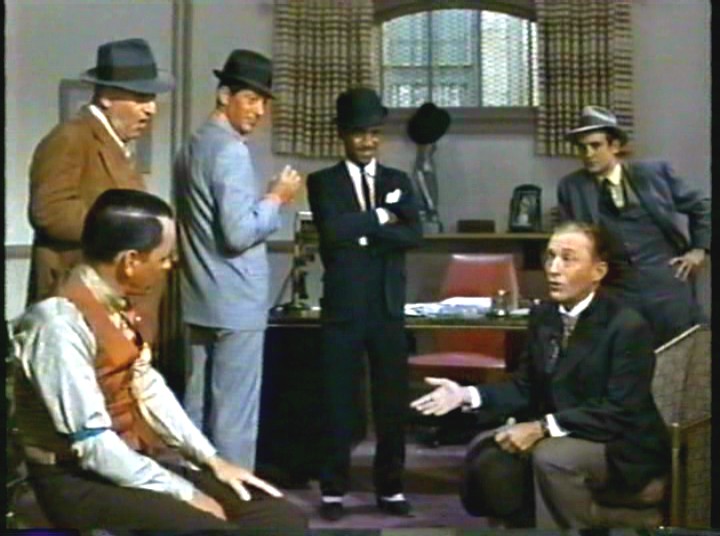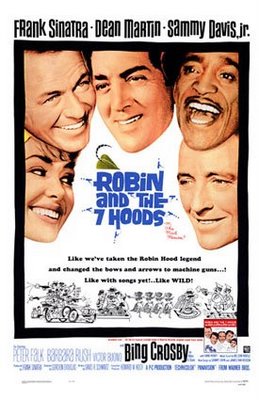
To review: Little John (Deano) has joined up with Robbo (Sinatra) and his hoods. Little John learns of the threat of a takeover by Chicago's new crime boss, Guy Gisborne (Peter Falk). Little John suggests a premeditated attack--hit him before he can hit them.
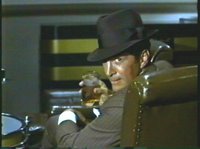
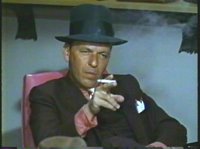 "When your opponent is sitting there holding all of the aces, there's only one thing left to do: kick over the table."
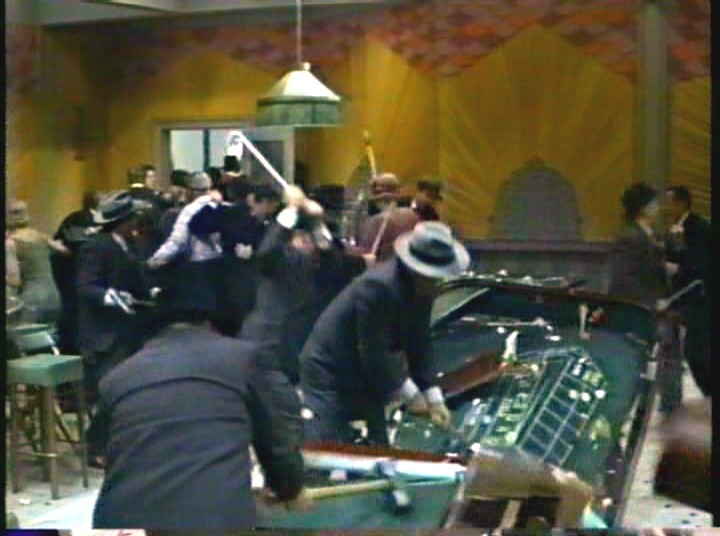
Problem is, Gisborne hits Robbo's gambling establishment just as they're hitting his.
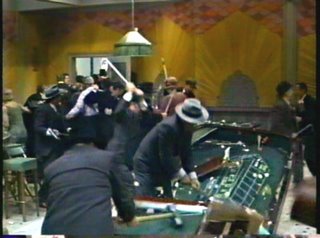
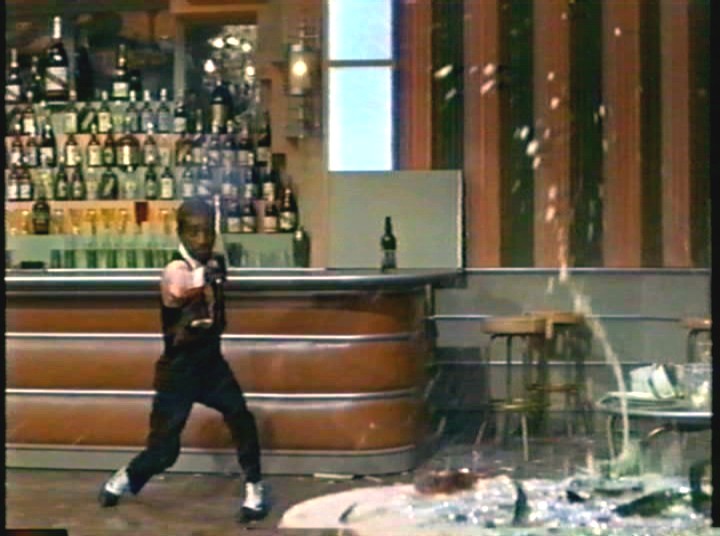
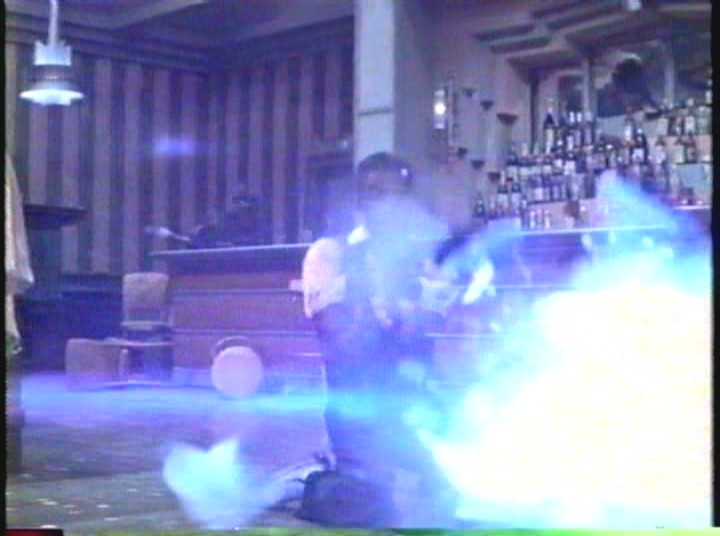
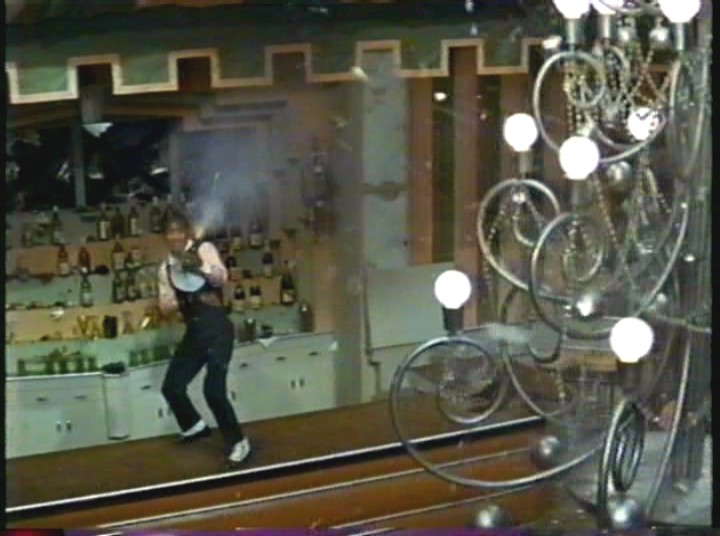
Robbo and gang tear up Gisborne's place a little more...elegantly, with Will (Sammy Davis, Jr.) doing a song and dance to "Bang Bang".

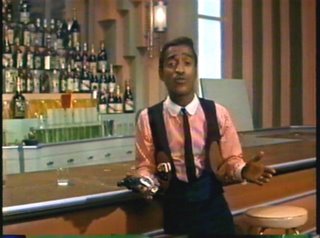
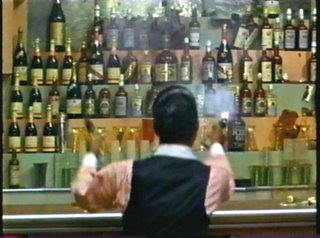
 I like the fun of reaching for a gun and going "bang, bang"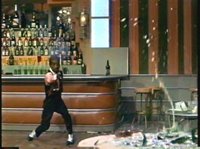
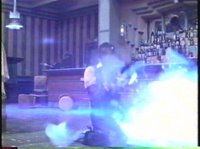 I come alive each time a .45 begins to "bang, bang"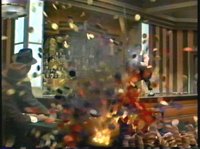
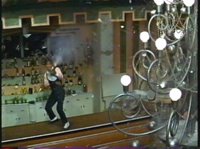 My kind of prank is going in a bank and going "bang, bang"
Now, both Robbo's
and newly, self-appointed crime boss, Gisborne's, clubs have been destroyed.
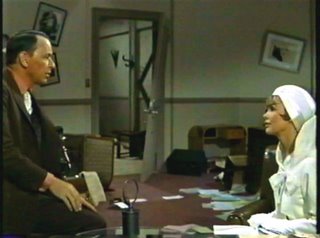
Back at his place, Robbo meets Marian, played by
Barbara Rush. She also appeared in the Sinatra movie
Come Blow Your Horn. Marian is Big Jim's (recently murdered crime boss, much beloved by Robbo) daughter. She wants Robbo to avenge her father's murder.
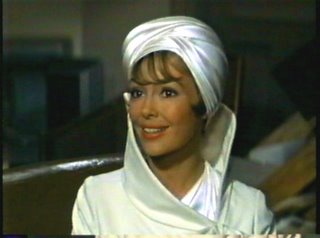
Robbo tells her his job is to "make people happy with gambling and bootleg beer," not bumping people off. But Big Jim's murderer
is killed, by one of Gisborne's thugs. Marian thinks Robbo is responsible, and she sends him $50,000. Robbo tells his guys to give it to an orphanage.
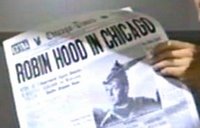
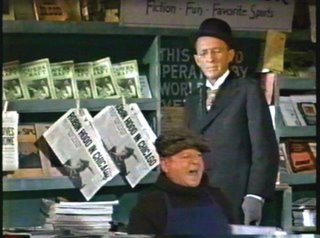
This leads to the secretary of the orphanage, Allen A. Dale, doing a write up for the paper in which he compares Robbo to
Robin Hood. Robbo is completely surprised by it all, yet somehow, the newspapers manage to produce a picture of Robbo completely decked out in Robin Hood gear. Strange.
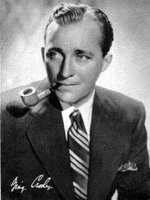 Bing Crosby
 plays Allen A. Dale. Of course, without Crosby, there would not have been a Sinatra. Sinatra
idolized Crosby, and became a singer after seeing him in a movie.
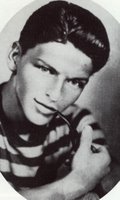 Dreams do come true.Robin and the 7 Hoods
 was not the first movie to star both Sinatra and Crosby. That "historic" moment had already occured in
High Society (a movie I
may recap), eight years earlier (1956).

Town folk gather around to hear this very important bulletin on the radio:
"The new Robin Hood's method of taking from the rich differs slightly from his predecessor. He uses the gambling tables and the Chicagoan's thirst for bootleg beer to give to underprivaledged oprhans. All the world loves a scoundrel, it seems, and its newest hero is Robbo."
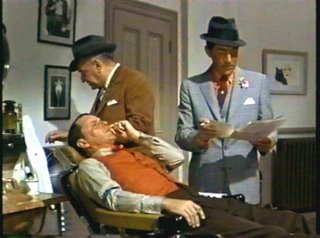
The problem is, you give 'em an inch, they'll take a freakin' mile. Robbo begins to receive stacks and stacks of letters requesting assistance in one form or another (typically monetary) from people with all kinds of problems.
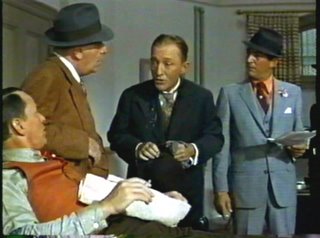
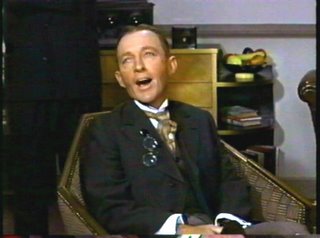
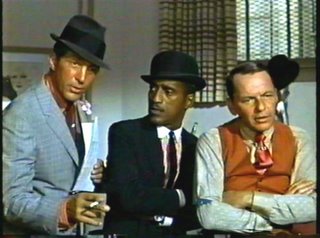
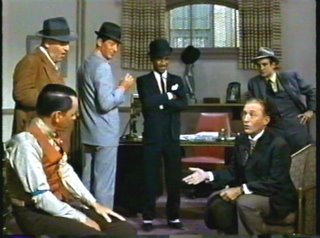
Allen A. Dale shows up and offers to help Robbo in his new incarnation as a charitible, upstanding citizen. Watch Bing Crosby become a "hood":
My favorite part of that are the pained expressions on the faces of Robbo and his guys as they attempt to understand Allen Dale's erudite and intellectual manner of speaking.
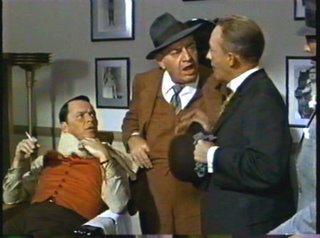
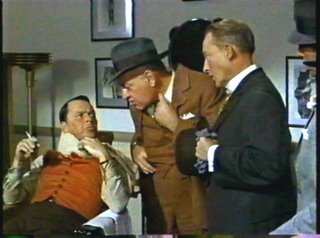 Dere's sumpin' wrong wit his troat!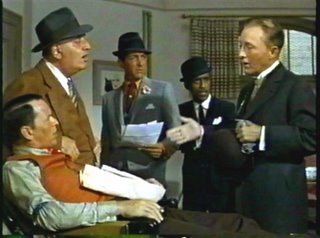
Note Dean and Sam.
Dale gets to work, setting up various "Robbo Foundation" charities.
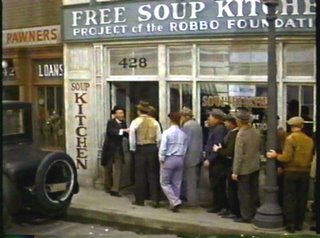
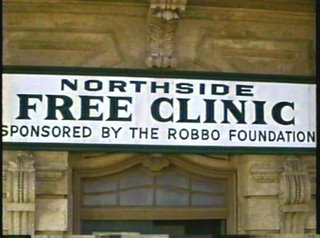
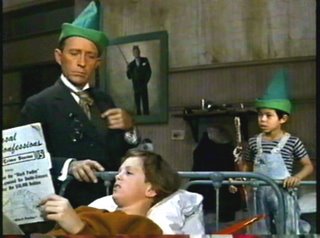
They put up a portrait of Robbo in the orphanage. Movie buffs might recognize the little boy to the right. He is
Manuel Padilla, Jr., who I remember best as "Jai" in reruns of the
Ron Ely Tarzan series. Looking over his IMDb page, it appears his acting career never really took off. As recently as
Scarface (1983), he was still getting parts like "Kid #2".
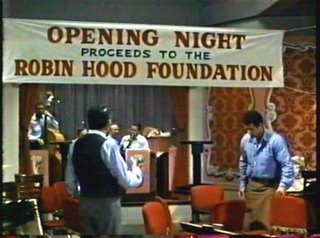
Robbo's club is redone following Gisborne's destruction of it, with the proceeds of the opening night going to the now named "Robin Hood Foundation".
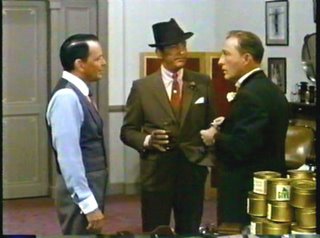
Robbo tells Allen Dale to go home and get dressed for the "classy opening". Here now is Frank, Dean, and Bing Crosby singing
"Style". Yes, it's corny, it's cheesey, but they don't make 'em like this anymore! Of course, there are no longer "stars" such as Sinatra and Crosby.
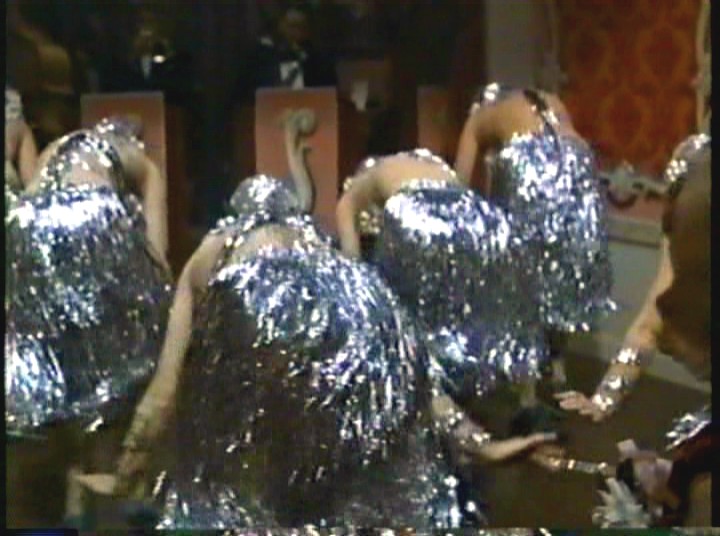
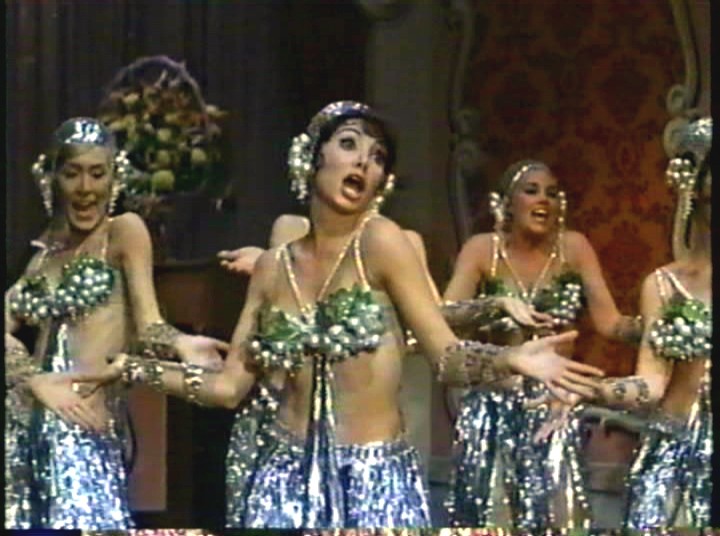
Meanwhile, at the opening, sexy (for 1964) dames in silvery, metallic hula thingies do their flapper dancing...
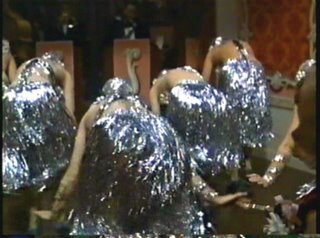
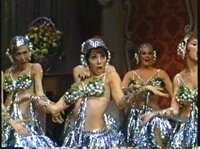
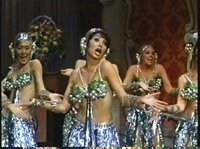
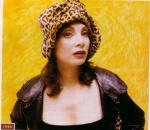
Could that be
Toni Basil?
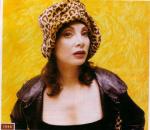
She isn't credited anywhere I could find, but it sure
looks like her. She is the lead dancer in this performance, leading me to believe whoever the dancer is,
she choreographed it. I wonder if she was embarassed about an association with Sinatra, seeing as he was
torn down and demonized throughout the 1980s, when Basil's career hit is peak. It wasn't "cool" to be associated with Frank Sinatra.
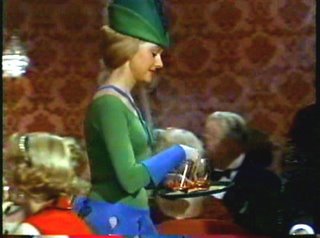
The cocktail waitresses add to the club's new, "Sherwood Forest-like" ambiance.
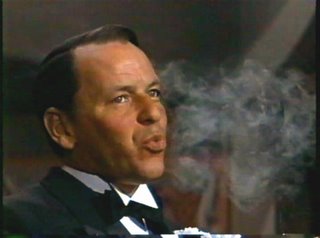
Robbo quite likes this charity thing. He is happy with how the re-opening of his club turns out. We haven't heard from crime boss Gisborne in a while. Might
he turn the blue skies into grey? Part three, coming up, hopefully with less
words.
part 3


 This is one of those fantastic Sinatra/Nelson Riddle collaborations. I just love Riddle's cool, breezy arrangement, with its lush strings, vibes, those "Riddle flutes," and the playing of trumpeter Harry "Sweets" Edison. I've read somewhere Sinatra mandated that Edison should have his own microphone during the recording of Songs for Swingin' Lovers!, and it's easy to hear why on tracks such as this one. Longtime fans would have a hard time imagining many of Sinatra's recordings without Edison's playing.
 "Moonlight Becomes You" was written by Jimmy Van Heusen with lyrics by Johnny Burke. It was written for the 1942 film Road to Morocco. The tune is used quite effectively in a scene in which Bing Crosby serenades the lovely Lamour (Dorothy). Bob Hope didn't stand a chance!
 "Moonlight Becomes You" was also chosen for the opening track on Sinatra's collection of moon songs, one of my favorites, Moonlight Sinatra (1966).
 Come Fly with Me it ain't (although, it does feature "Brazil" and "Isle of Capri," also on the Sinatra album), but I'm sort of enchanted by it. Some of it is very good. My current favorite is "Say 'Si Si' (Para Vigo Me Voy)," near the end of side two, which features a great example of Billy May and Orchestra's "big, brassy sound," and Crosby and Clooney's voices sound really great together. The concept of the album came from Sammy Cahn and Jimmy Van Heusen, two guys who wrote several of Sinatra's best known songs, including "Come Fly with Me."


 From the Wikipedia entry:
 The song is probably most famous for its opening lines, "Heaven, I'm in heaven, and my heart beats so that I can hardly speak..." and was featured in the Astaire-Rogers movie, soon becoming a standard sung by many other artists, including Bing Crosby, Louis Armstrong, Ella Fitzgerald, Eva Cassidy, Doris Day, Jane Monheit and Frank Sinatra.
 The song, as sung by Astaire and Fitzgerald, is featured in the movie The English Patient. It is sung by Kenneth Branagh in Love's Labour's Lost. It is also shown being performed in The Green Mile, Rain Man and The Purple Rose of Cairo when Top Hat is being viewed.


 During the meal, one of the Crosby's kids complained about how he didn’t want to go to school the next day. The singer said to him, “If you don’t go to school, you might grow up to be a mule. Do you wanna do that?” Van Heusen thought that this would make a perfect song for the film. He envisioned Bing, playing a priest, talking to a group of children. When he took his idea to his partner, Johnny Burke, Burke was quick to approve, and they wrote the song. It won the Academy Award for Best Original Song in 1944.
 While I like the version Crosby does in the film, I find Sinatra's version (all roads lead back to Frank) from Sinatra Sings Days of Wine and Roses, Moon River and Other Academy Award Winners (1964) to have a few more...teeth. He and conductor/arranger Nelson Riddle managed to maximize the swing quotient quite a bit. Here's a little taste. It's one of those rare circumstances where the Chairman wasn't singing about affairs of the heart.
 From the Sinatra/Rat Pack movie Robin and the 7 Hoods, here are Bing Crosby, Dean Martin and Sinatra performing "Style," by Sammy Cahn and James Van Heusen:

 From YouTuber 1132ken comes this great footage of Ol' Blue Eyes and Der Bingle singing Bing's old chestnut, "White Christmas." It is the 1957 Christmas special from Sinatra's ABC television series, "The Frank Sinatra Show." I love this scenario, and marvel at how it could only be taken seriously in the 1950s. I mean, two middle-aged men, dressed in coat and tie, having a formal dinner at a swingin' bachelor pad, just the two of them? How often does that ever happen? Only on TV. Only in 1957. You gotta' love it.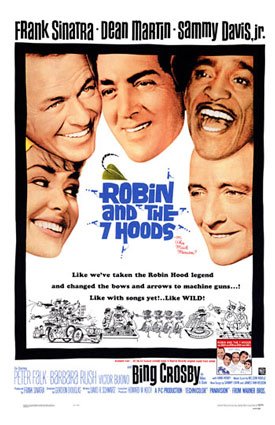

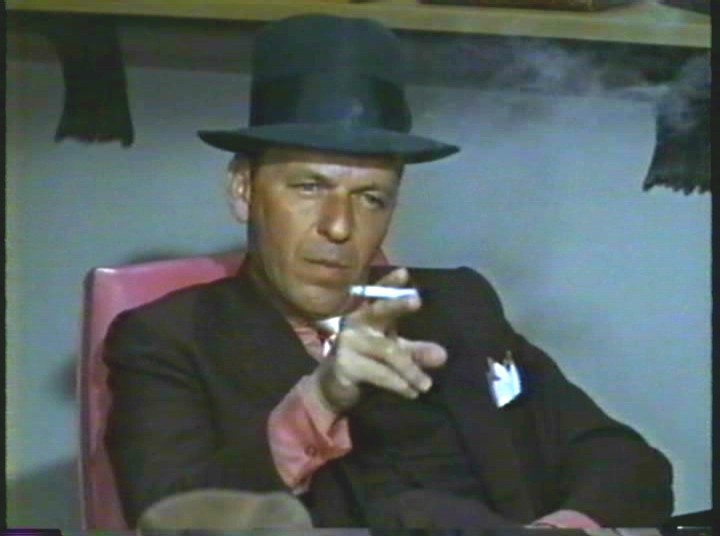


 I like the fun of reaching for a gun and going "bang, bang"